
Gallbladder pain deserves clear answers.
Gallstones, repeated upper abdominal pain, nausea after meals, or an unexpected ultrasound result can leave you wondering what to do next. Dr. Colin Dunn provides a careful evaluation to help you understand what may be causing the problem and which next step makes sense.


Request a Gallbladder evaluation
A consultation is for clarity. Surgery is not automatic.

Some symptoms need urgent medical care.
Seek urgent medical care for severe or constant abdominal pain, fever or chills, yellowing of the skin or eyes, dark urine or pale stools, persistent vomiting, chest pain, fainting, trouble breathing, or rapidly worsening symptoms.
Your symptoms deserve more than a guess.
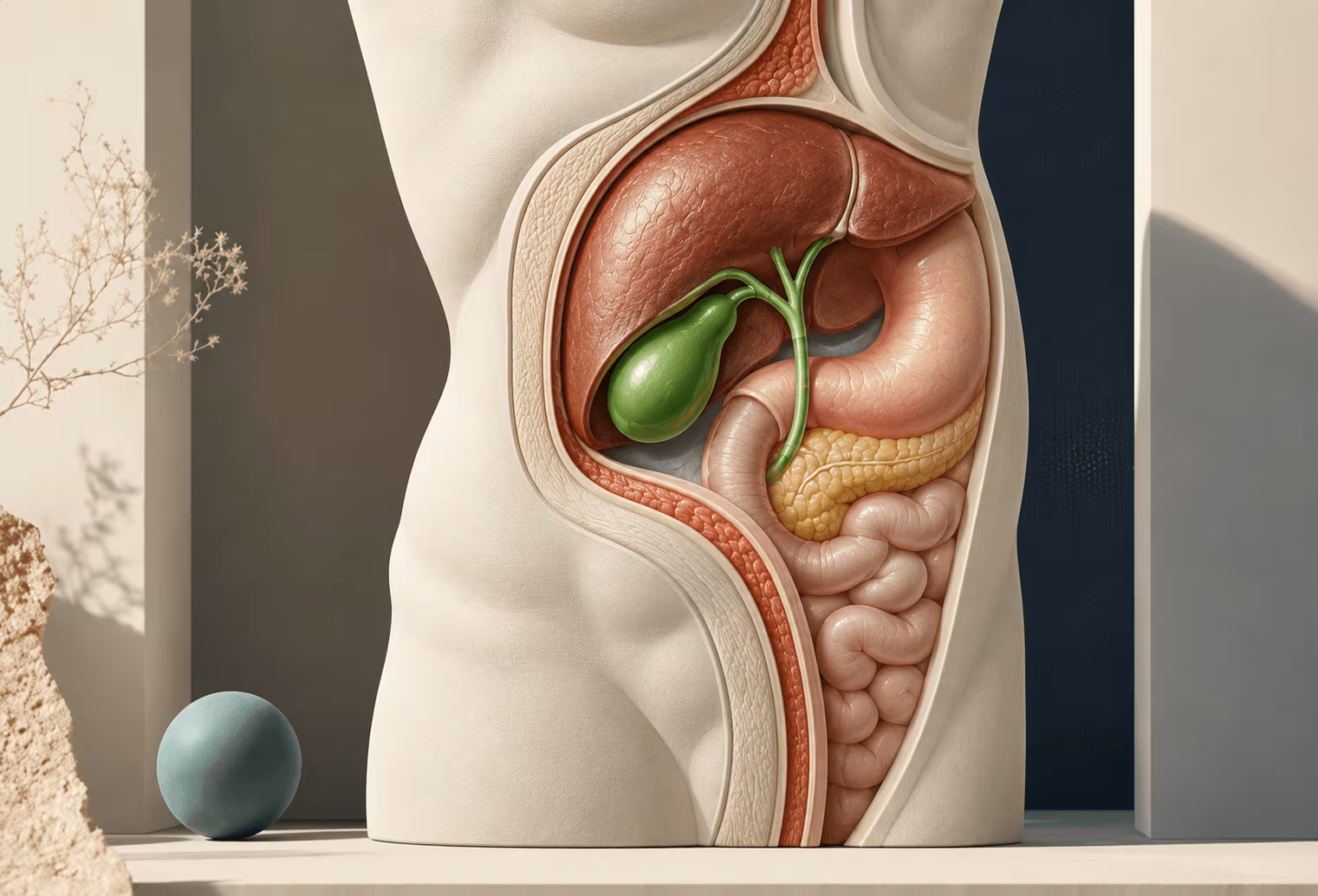
The gallbladder stores bile, a fluid that helps digest fats. Gallstones, inflammation, poor emptying, or a blocked bile duct can cause pain and other symptoms. But similar symptoms can also come from other digestive or medical conditions.
A careful evaluation reviews the full pattern, including when symptoms occur, prior imaging or lab work, your health history, and whether more information is needed before any treatment decision.

Do any of these sound familiar?
Not every gallbladder concern needs surgery. A timely evaluation can help explain the pattern and clarify what should happen next.
Pain that keeps coming back
Repeated pain under the right ribs or in the upper abdomen, especially after meals, is worth discussing with a specialist.
Nausea or discomfort after eating
Nausea, vomiting, bloating, or discomfort after fatty meals can be part of the picture. An evaluation helps determine whether the gallbladder may be involved.
Known gallstones or an abnormal test
If an ultrasound, HIDA scan, CT scan, or lab result raised a question, bring it to your consultation for a careful review.
An ER visit or an unclear plan
If you were seen for abdominal pain, told to follow up, or are unsure whether to monitor or take the next step, a surgical consultation can help clarify the plan.
Start with your symptoms and tests, not a predetermined procedure.
The goal of a consultation is not to rush you into surgery. It is to understand whether your symptoms and test results point to a gallbladder problem, whether additional evaluation may help, and which option fits your situation.
Review the available information
Your visit may include a review of imaging, lab work, emergency notes, medications, and the pattern of your symptoms.
Clarify the diagnosis
When more information is needed, your care team may discuss further testing or coordination with other clinicians.
Discuss treatment in context
Depending on your evaluation, the next step may be monitoring, dietary guidance, medical care, treatment of a bile-duct issue, or a conversation about gallbladder surgery.

Know what your symptoms may point to. Then get the right guidance.

The name is only a starting point. Your symptoms, exam, lab work, and imaging help define the next step.
Your first appointment is for answers
Request an evaluation
Use the short form to let our team know what you are hoping to understand.
Connect with the team
We explain the scheduling process and help you prepare for your visit.
Complete a personal evaluation
Your symptoms, history, and available records are reviewed in the context of your health and goals.
Leave with a clear next step
You will understand the most reasonable next step, whether that is follow-up, additional evaluation, treatment, or a surgical discussion.

Come prepared with the questions that matter.
A useful consultation should help you understand what your symptoms and tests may mean, not simply leave you with a procedure name.
Useful questions to bring


Dr. Colin Dunn
Dr. Dunn provides patient-centered surgical care built on careful evaluation, clear communication, and individualized treatment planning. Your visit begins with a conversation about the concern in front of you and the questions you need answered.
Common questions about gallbladder concerns.
These answers can help you prepare for a more useful conversation. They do not replace an individual medical evaluation.

No. A consultation is a chance to understand whether your symptoms and test results point to a gallbladder problem and what options may make sense. Some people may need more evaluation, monitoring, or another type of care. Surgery is considered only when it is appropriate for the individual situation.
An abdominal ultrasound is often the first test used to look for gallstones or inflammation. Depending on your symptoms and prior results, your team may also review blood work, a HIDA scan, CT imaging, or other testing. Not everyone needs every test.
Seek urgent medical care for severe or constant abdominal pain, fever or chills, yellowing of the skin or eyes, dark urine or pale stools, persistent vomiting, chest pain, fainting, trouble breathing, or rapidly worsening symptoms. Do not wait for an online appointment request if you have these symptoms.
Your visit typically begins with a review of your symptoms, health history, prior imaging, lab results, medications, and any relevant emergency or urgent-care records. The goal is to help you understand what may be causing the problem and the next reasonable step.
Yes. The liver continues to make bile after gallbladder removal, and bile flows directly into the small intestine. Your surgeon can explain whether removal is appropriate for you and what to expect during recovery.
Recovery depends on your condition, the surgical approach, your health, and the work or activity demands you plan to return to. Many planned laparoscopic cases may go home the same day, but your surgeon will give you specific recovery and activity guidance based on your situation.
Ready to get clear answers about your gallbladder?
If repeated pain, nausea after meals, gallstones, or an unclear test result is affecting your routine, start with a careful conversation about what may be causing it and what could help.