
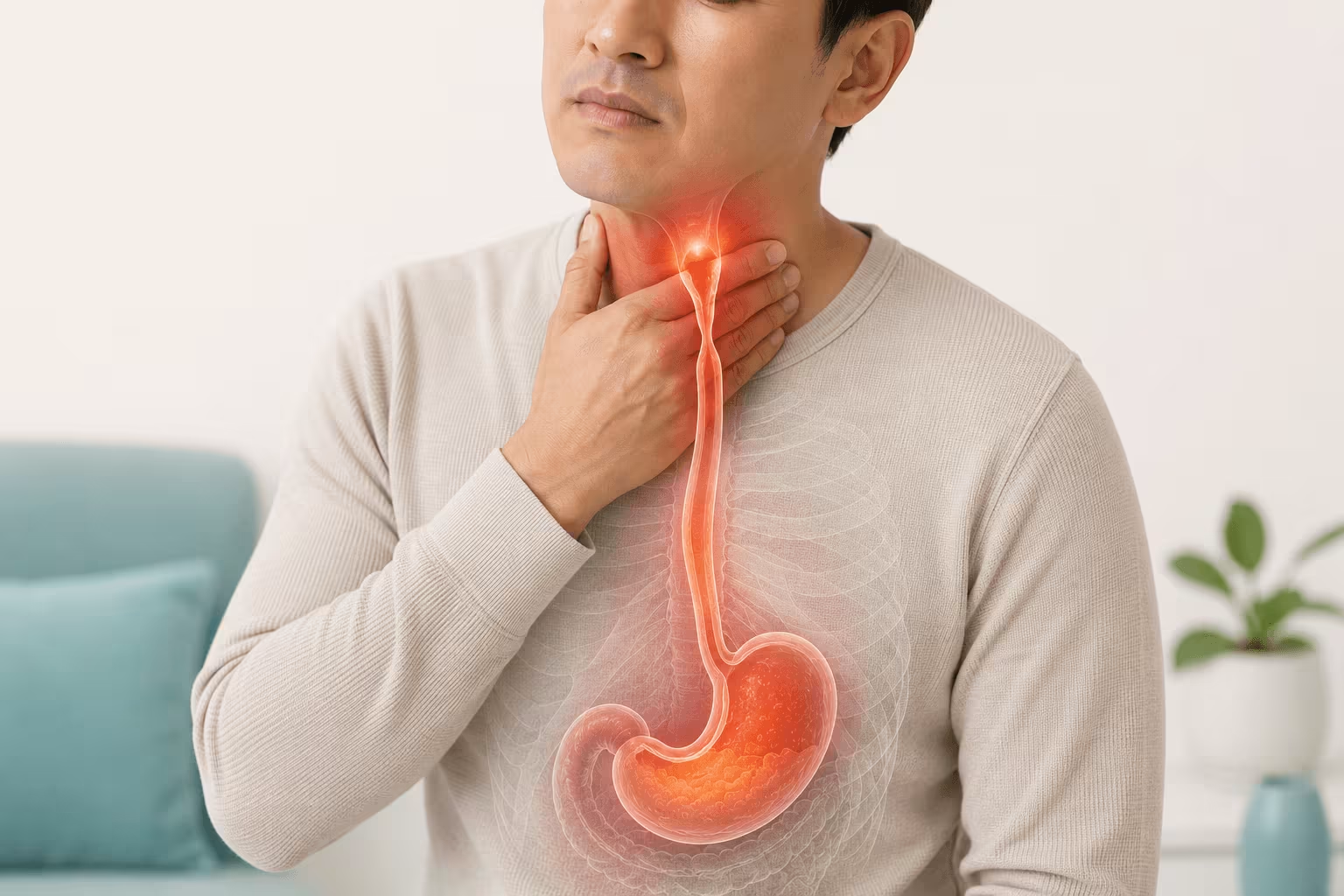


Difficulty Swallowing
Difficulty swallowing (dysphagia) can affect food, liquids, or saliva. It may feel like food is stuck in your chest or throat and needs medical evaluation.
The short answer
Difficulty swallowing is a symptom, not a diagnosis. First we decide if the problem is oropharyngeal or esophageal. Oropharyngeal means the mouth or throat. Esophageal means the food tube to the stomach.
Oropharyngeal problems may cause coughing, choking, or a wet voice. Esophageal problems often feel like food sticking in the chest. Both need evaluation. Untreated trouble can cause dehydration, weight loss, choking, or lung infection. Aspiration means food or liquid goes into the lungs.
Common patient questions and usual next steps
"Food gets stuck in my chest." Possible narrowing, stricture, ring, eosinophilic esophagitis, achalasia, or hernia. Typical next step: Review symptoms. Consider endoscopy, barium swallow, manometry, or EndoFLIP.
"I cough or choke when I drink." Possible oropharyngeal dysphagia or aspiration risk. Typical next step: Swallow-safety check with a speech therapist. Tests may include VFSS or FEES.
"Solids are hard but liquids are fine." Often a mechanical narrowing or blockage. Typical next step: Endoscopy and/or barium swallow to look for narrowing.
"Solids and liquids both get stuck." Possible motility disorder such as achalasia or spasm. Typical next step: Manometry, timed barium swallow, EndoFLIP, and specialist review.
"Swallowing is painful." Possible inflammation, infection, ulcer, pill injury, or reflux damage. Typical next step: Medical evaluation, often starting with endoscopy or targeted testing.
Types of dysphagia
Oral dysphagia: Trouble chewing or moving food in the mouth. May need dental care, speech therapy, or neurologic testing.
Oropharyngeal dysphagia: Trouble starting a swallow or protecting the airway. Can cause coughing, choking, aspiration, or pneumonia risk.
Esophageal dysphagia: Trouble after the swallow starts, felt as food sticking. May involve reflux, narrowing, motility disorders, or tumors.

Common symptoms
Food feels stuck in the throat, chest, or behind the breastbone.
Solids are harder than liquids, or solids alone are hard.
Solids and liquids both get stuck.
Coughing, choking, or a wet voice after swallowing.
Regurgitation of food or sour fluid.
Pain when you swallow.
Unintended weight loss, dehydration, or avoiding meals.
If symptoms affect nutrition, breathing, or cause repeated lung infections, seek prompt evaluation.
Common causes
Dysphagia can come from many problems. Where you feel the problem may not match the actual location. A throat feeling can still come from a lower esophageal issue.
Risk Factors
Narrowing or scarring of the esophagus from reflux or injury.
Eosinophilic esophagitis, an allergic inflammation of the esophagus.
Rings or webs that narrow the esophagus, such as a Schatzki ring.
Hiatal hernia, where part of the stomach pushes up into the chest.
Motility disorders, where the esophagus does not move food normally.
Achalasia is a motility disorder where the lower sphincter does not relax.
Zenker’s diverticulum, a pouch that traps food in the upper esophagus.
Neurologic causes like stroke, Parkinson’s disease, or other nerve disorders.
Prior surgery, radiation, infection, or tumors.
Lifestyle Triggers
• Consuming solid foods or specific textures.
• Swallowing pills or large medications.
• Persistent acid reflux or heartburn symptoms.
• Allergic responses to certain food groups.

Get emergency care if you:
Cannot swallow saliva or cannot keep liquids down.
Are actively choking or have trouble breathing.
Have sudden severe chest pain or vomit blood.
Pass black stools, faint, or have sudden neurologic signs.
Make a routine medical appointment if swallowing trouble is persistent. Also see your provider if symptoms worsen, cause weight loss, or cause anemia.
How difficulty swallowing is diagnosed
Diagnosis starts with a careful history and physical exam. Your provider will ask what is hard to swallow and where it feels stuck. They will also ask about pain, weight loss, coughing, or pneumonia history.
Common tests include the following. No single test fits every patient. The right tests follow the symptom pattern.
Additional diagnostic tests
Esophageal manometry: Measures muscle contractions and sphincter relaxation. Key for diagnosing achalasia and other motility disorders.
Reflux testing (pH study): Measures acid exposure in the esophagus. Helps link symptoms to reflux before anti-reflux procedures.
EndoFLIP: Test during endoscopy that measures opening and stiffness. Helps plan advanced procedures for motility or reflux problems.
Camera exam of the esophagus, stomach, and duodenum. Finds inflammation, strictures, rings, tumors, or Barrett’s esophagus.
X-ray study showing esophageal shape and pouches. Useful for Zenker’s, hernia, rings, or procedure planning.
Video X-ray of the mouth and throat during swallowing. Shows swallowing mechanics and aspiration risk.
Camera exam of the throat during swallowing. Evaluates airway protection and guides speech therapy.
Treatment options
Treatment depends on the cause. Surgery or advanced procedures are considered only after proper testing. Many problems are treated without surgery. Treatment is personalized to your needs.
Treatment Categories
Swallowing therapy and safety: Exercises, posture changes, texture changes, thickened liquids. Best for oropharyngeal dysphagia or aspiration risk.
Medication: Acid-suppressing drugs, steroids for eosinophilic esophagitis, antibiotics. Best for inflammatory or reflux-related causes.
Endoscopic treatment: Dilation, removing blockages, targeted biopsies. Best for strictures, rings, webs, or eosinophilic narrowing.
Foregut surgery or advanced procedures: Heller myotomy, POEM, Zenker’s repair, hernia or anti-reflux surgery. Best for selected patients with confirmed motility, hernia, or reflux anatomy.
Nutritional support: Diet planning, hydration strategies, or feeding tube when needed. Best for severe dysphagia affecting calories, fluids, or safety.
When to see a foregut (esophageal) specialist
See a foregut specialist when the following occur. A specialist can review past tests and plan next steps. This may include more testing, therapy, medication, endoscopic care, or surgery.
Likely good candidates
Food sticks after the swallow.
Symptoms feel centered in the chest.
Solids are difficult, or solids and liquids both get stuck.
Regurgitation is common.
Long-term reflux is changing your swallowing.
You have a known hiatal hernia, prior narrowing, or suspected achalasia or Zenker’s.
Prior testing did not explain your symptoms.
May need further evaluation
Seek specialist evaluation if you experience any of the following:
• Swallowing difficulty that is persistent or worsening.
• Unintended weight loss, dehydration, or malnutrition.
• Frequent coughing, choking, or repeated lung infections.
• Food sticking in the chest or frequent regurgitation of food.
• Swallowing changes associated with long-term reflux or a known hernia.
Not sure if you qualify?
Dr. Dunn reviews every case personally. Book a consultation and he'll give you an honest answer — even if that answer is "let's get more testing first."
What recovery looks like
Why the order of testing matters
Testing should match your symptoms. If you cough with liquids and have pneumonia, test swallow safety first. If solids are getting worse, endoscopy should come first. Good care avoids assumptions. Normal results on one test do not rule out other problems. Objective tests help match the right treatment to the real cause.
We review your symptoms, medical history, and prior tests to determine if the swallowing problem is oral, esophageal, or a combination of both.
We assess safety concerns like aspiration or obstruction to identify the most appropriate diagnostic tests and treatments for your condition.
Your personalized plan may include speech therapy, imaging, endoscopy, manometry, medication, or advanced surgical procedures.
<p>Treatment is tailored to the specific cause of your swallowing difficulty and may include:</p><p>• Swallowing therapy, including exercises and diet modifications.</p><p>• Medications for reflux, inflammation, or infection.</p><p>• Endoscopic treatments such as dilation to open narrowed areas.</p><p>• Specialized foregut surgery for motility disorders, hernias, or Zenker’s diverticulum.</p>
Frequently asked questions

Difficulty swallowing, also known as dysphagia, can make eating and drinking feel unsafe or painful. Common symptoms include feeling like food is stuck in your throat, chest, or behind your breastbone. You might find that solids are harder to swallow than liquids, or you may struggle with both. Some people experience coughing, choking, or a wet voice immediately after swallowing. You might also notice food or sour fluid coming back up, which is called regurgitation. Persistent swallowing trouble can lead to unintended weight loss or dehydration. If you are avoiding meals because of these issues, it is important to understand that dysphagia is a symptom that requires a careful medical evaluation to find the underlying cause.
Because swallowing involves many muscles and structures, doctors use several tests to find the exact problem. An upper endoscopy uses a small camera to look for inflammation, narrowing, or blockages in the esophagus. A barium swallow is an X-ray study that shows the shape of your food tube and identifies pouches or hernias. Esophageal manometry measures how well your muscles contract and if the lower sphincter relaxes properly. Other specialized tests like VFSS or FEES check your throat-phase swallowing and look for aspiration risks. Your specific symptoms will guide which tests are best for you. These objective tests help your provider match the right treatment to the real cause of your swallowing difficulty.
You should consider seeing a foregut specialist if food frequently feels stuck in your chest after you swallow. Specialist care is also recommended if solids and liquids both become difficult to manage or if long-term reflux is changing how you swallow. A specialist can review your history and prior tests to plan advanced next steps. Treatment options depend on the cause and are personalized to your needs. This may include swallowing therapy, medications for inflammation, or endoscopic treatments to widen narrow areas. In some cases, advanced procedures like a Heller myotomy or hernia repair are considered if testing confirms a specific condition. Seeking expert care helps ensure you receive a proper diagnosis and an individualized treatment plan.
While persistent swallowing trouble should always be discussed with a provider, some symptoms require immediate medical attention. You must seek emergency care right away if you cannot swallow your own saliva or keep any liquids down. Active choking or having trouble breathing are critical signs that you need help now. Other urgent warnings include sudden severe chest pain, vomiting blood, or passing black stools. You should also get emergency help for sudden neurologic signs like trouble speaking, facial drooping, or fainting. If your symptoms are severe enough to affect your nutrition or cause repeated lung infections, you need a prompt evaluation. Do not wait for a routine appointment if you experience these dangerous signs.



We don’t hand you discharge papers and call it done. Here’s what we promise—in writing:
How our guarantee works
Off your meds
No more daily antacids or reflux medication within one month of surgery. Most patients are surprised by how quickly they stop reaching for the bottle.
Sleep flat again
Lying flat without reflux within one month, no more propped pillows or elevated bed frames at night. Wake up rested, the way you used to.

Eat your favorites
Enjoy your trigger foods again within one month of your surgery. Spicy food, coffee, wine, back on the table, without the worry.