


Hiatal Hernia Repair
Hiatal hernia repair may help if you have reflux, swallowing trouble, or chest and upper belly pressure. Dr. Colin Dunn evaluates patients in Silicon Valley.
What is hiatal hernia repair?
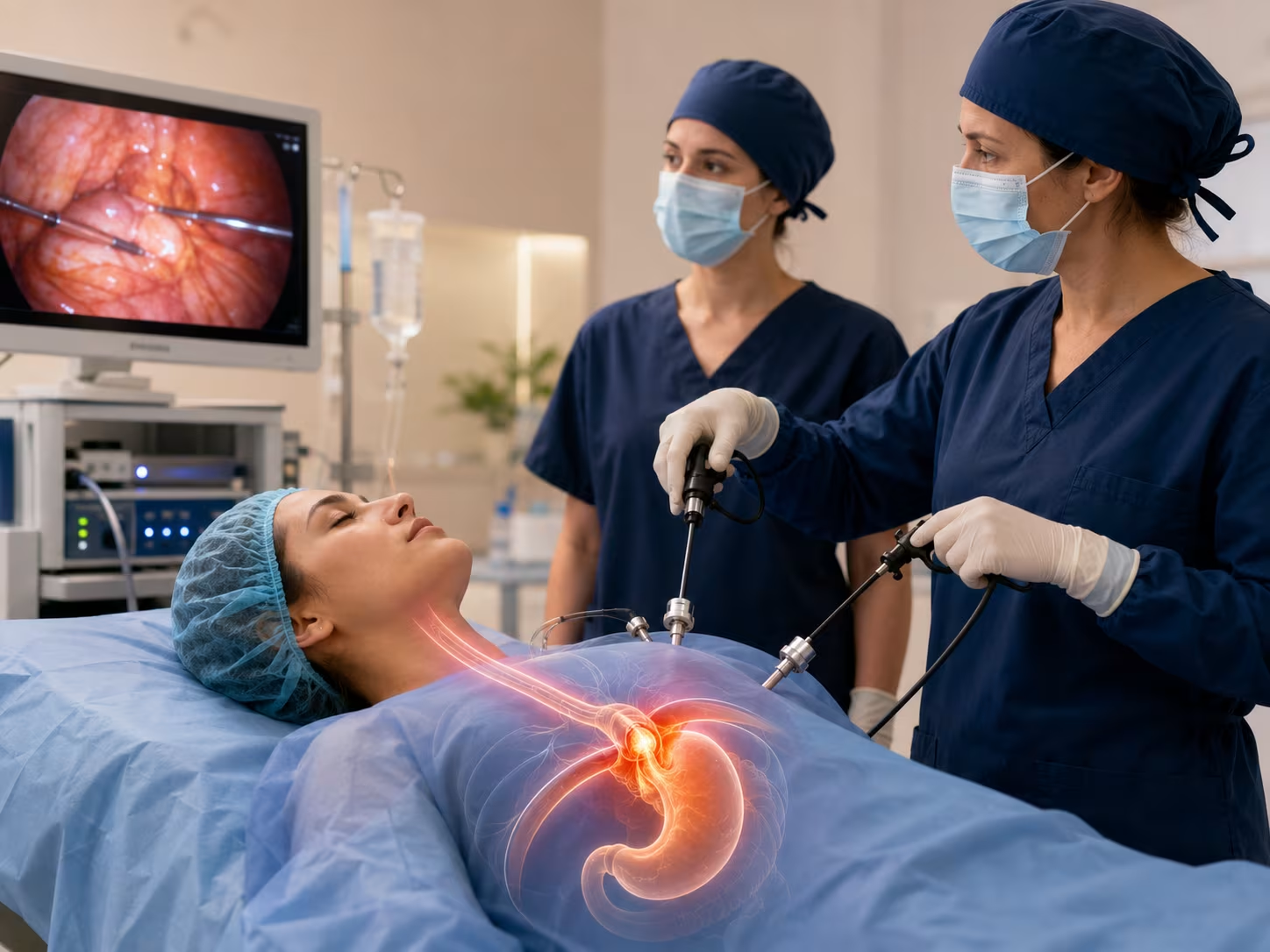
The hiatus is the opening in the diaphragm for the esophagus. A hiatal hernia occurs when the stomach bulges up through that opening into the chest. Hiatal hernia repair is surgery to bring the stomach back into the abdomen. The surgeon also tightens or repairs the enlarged diaphragm opening. Often an anti-reflux procedure is added when reflux is part of the problem.

Why choose NorCal Integrity Surgery
Hiatal hernia repair requires careful interpretation of symptoms, imaging, reflux physiology, and swallowing function. Dr. Colin Dunn provides a structured, individualized evaluation focused on diagnosis, safety, and choosing the repair that best fits your anatomy and needs.
How hiatal hernia repair is done
The operation is tailored to each patient and usually involves bringing the stomach back into the abdomen, mobilizing the esophagus, and closing the hiatus.
Bring the stomach back into the abdomen.
Get enough esophagus length into the abdomen to keep the repair from being under tension.
Tighten the diaphragm opening to keep the stomach down.
Often a fundoplication or another anti-reflux method is used when appropriate.
Nullam nec placerat massa. Aenean cursus eros non libero ultricies, sit amet tristique mi viverra. Phasellus pharetra egestas nunc tincidunt pretium. Proin euismod lorem id mi accumsan euismod. Integer non efficitur mauris. Donec efficitur nulla eu dolor tincidunt porta.
Testing before repair
Testing helps the surgeon understand structure and function. The exact tests depend on your symptoms and prior results.
Required before surgery
• Upper endoscopy: looks inside the esophagus and stomach for inflammation, ulcers, or narrowing.
• Barium swallow (esophagram): shows hernia size, stomach position, and how the esophagus empties.
• Esophageal manometry: measures muscle contractions and coordination in the esophagus.
Sometimes also ordered
• Reflux testing: confirms whether symptoms come from acid or non-acid reflux.
• EndoFLIP: measures how stretchy the esophagus and its valve are.
• CT scan: used in some large or complex hernias to define nearby anatomy.
Who may be a candidate?
Surgery is considered when symptoms persist despite medicines and lifestyle changes or when tests show the anatomy will not improve with medicines alone.
Likely good candidates
• Symptoms persist after medicines and lifestyle changes.
• Reflux is linked to a structural hiatal hernia.
• A paraesophageal hernia causes pressure or trouble swallowing.
• Tests suggest the problem is mechanical, not just acid.
• There is concern for bleeding, obstruction, or stomach twisting.
May need further evaluation
• Small hernias that cause no symptoms and can be safely watched.
Not sure if you qualify?
Dr. Dunn reviews every case personally. Book a consultation and he'll give you an honest answer — even if that answer is "let's get more testing first."
Risks to be aware of
Recovery depends on hernia size, prior surgeries, and overall health. Many patients stay at least one night after laparoscopic anti-reflux surgery. Light activity and walking are usually encouraged soon after surgery.
Common short-term side effects (expected and temporary)
Expected in recovery
• Gas-bloat, difficulty belching, and swallowing problems.
• General surgical risks include bleeding, infection, and anesthesia complications.
Serious risks (uncommon)
• Small risk of injury to nearby organs, blood clots, and pneumonia.
• Hernia recurrence or persistent reflux.
What recovery looks like
Call the surgical team for fever, worsening belly swelling, uncontrolled pain, persistent nausea, or breathing trouble.
Many patients stay at least one night after laparoscopic anti-reflux surgery. Light activity and walking are encouraged.
After fundoplication, a staged diet is common. You may have temporary swallowing difficulty, bloating, or trouble belching.
Close follow-up helps manage diet, swallowing, pain, and wound care.
Most people return to normal activity in about four weeks, but timelines vary by patient.
Swallowing difficulty and bloating often improve as swelling goes down and the repair heals.
What to expect long-term
No surgery can guarantee permanent relief or prevent all recurrences. Reflux may persist, and hernias can return. Some patients may need dilation, medicines, or further treatment later.
Questions about hiatal hernia repair

Deciding to have surgery for a hiatal hernia depends on your symptoms and how much they affect your daily life. Many small hernias do not cause any trouble and can simply be watched over time. However, Dr. Dunn may consider surgery if your symptoms continue even after you have tried medicines and lifestyle changes. You might also be a candidate if tests show that your hernia is a mechanical problem that medicine cannot fix. This is often the case when a hernia causes trouble swallowing, chest pressure, or severe reflux. Surgery is also an important option if there is a risk of serious issues like bleeding. A consultation helps determine if repair is the safest choice for your specific health needs.
Before planning your repair, several tests are used to understand the structure and function of your esophagus and stomach. An upper endoscopy allows the surgeon to look for inflammation or narrowing, while a barium swallow shows the size and position of the hernia. Another important test is esophageal manometry, which measures how well your muscles coordinate when you swallow. This helps the surgical team choose the safest type of anti-reflux procedure for you. You might also have reflux testing or a CT scan for more complex cases. These tests answer vital questions about the type of hernia you have and whether your symptoms are caused by acid or mechanical pressure. This detailed workup ensures the repair fits your specific anatomy.
During the procedure, the surgeon works to bring your stomach back into its proper place in the abdomen. The opening in your diaphragm, called the hiatus, is then tightened to prevent the stomach from moving up again. In many cases, an anti-reflux procedure called fundoplication is added. This involves wrapping the upper part of the stomach around the lower esophagus to reduce acid reflux. Most repairs are done using minimally invasive techniques with small incisions and a camera, which often leads to less pain and a shorter hospital stay. Robotic surgery may also be used for precise work. The exact approach is tailored to your unique anatomy and prior health history to ensure the most effective and safest repair possible.
Recovery after surgery varies, but most patients stay in the hospital for at least one night. You will be encouraged to start light walking soon after the procedure to help your body heal. Most people can return to their normal activities within about four weeks. Following a staged diet is very important as your body adjusts to the repair. You may experience temporary swallowing difficulty, bloating, or trouble belching while the swelling goes down. While surgery aims to improve your symptoms, it is important to know that reflux can sometimes persist or a hernia could return. Close follow-up with your surgical team helps manage your diet and ensures your recovery stays on track. Always report any sudden pain or fever immediately.

