
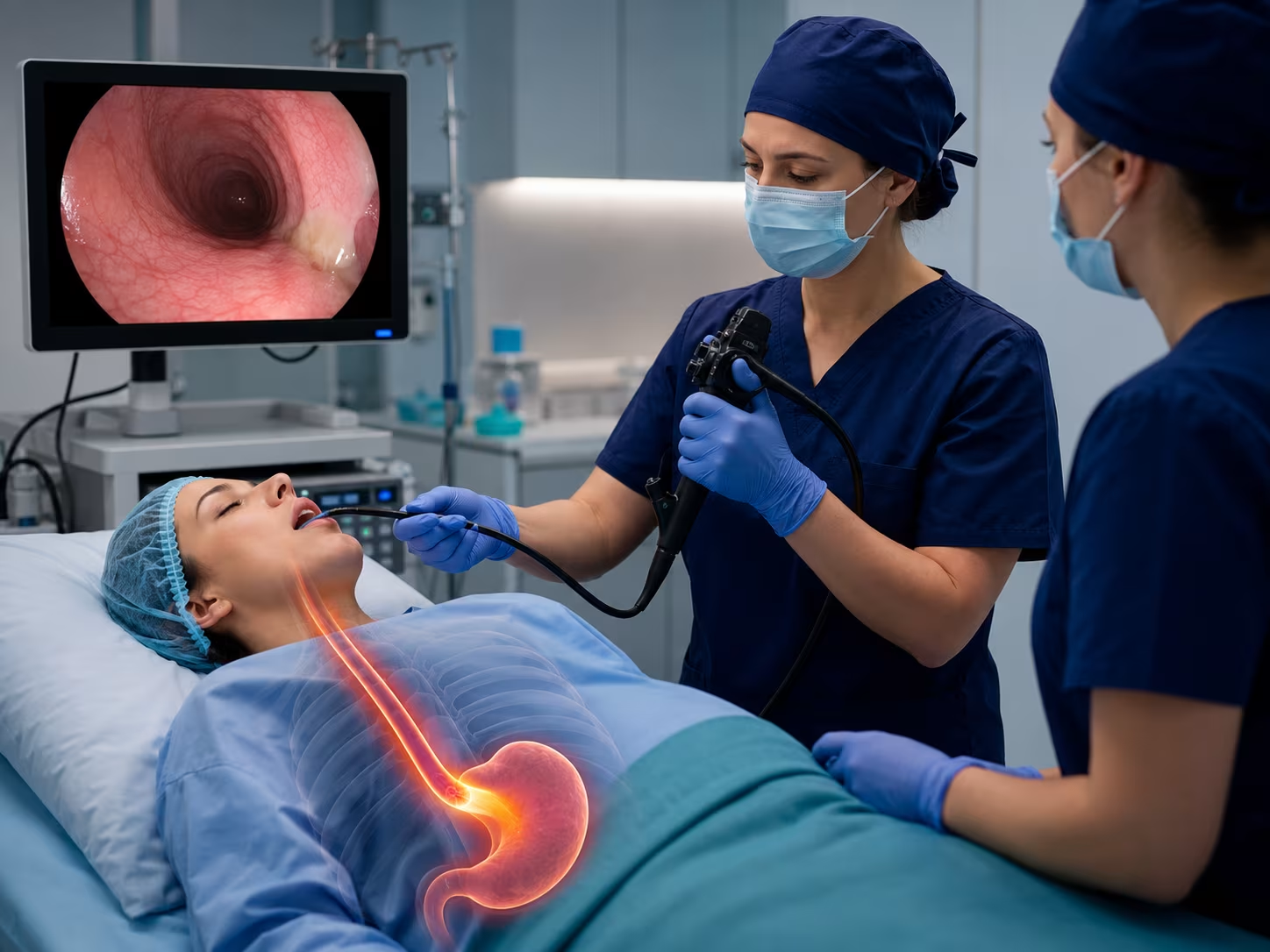


Heller Myotomy/POEM
Heller myotomy and POEM are procedures that treat achalasia by cutting tight muscle fibers at the lower esophageal sphincter to help food pass more easily.
Understanding Heller Myotomy and POEM for Achalasia
Achalasia is a disorder that makes swallowing difficult because the esophagus cannot move food well and the muscle valve between the esophagus and stomach does not relax enough. A myotomy is a surgery that cuts tight muscle fibers so the passage opens more easily. Heller myotomy and POEM are two different ways to perform this esophageal myotomy.

Choosing Between Heller Myotomy and POEM
Both procedures cut the tight lower esophageal sphincter muscle but differ in how the muscle is reached and in reflux risk. Heller uses small abdominal incisions and laparoscopy, while POEM uses an endoscope through the mouth with no visible skin incisions. The best option depends on your achalasia subtype, anatomy, prior treatments, reflux risk, and personal goals.
The Myotomy Procedure Process
Heller myotomy and POEM are both designed to relieve swallowing difficulties by dividing the tight muscle at the lower esophageal sphincter.
Dr. Dunn confirms the diagnosis and achalasia subtype through tests like manometry and endoscopy to customize your treatment plan.
Both procedures are performed under general anesthesia. Heller uses small abdominal incisions, while POEM uses an endoscope through the mouth.
The surgeon or doctor divides the tight muscle fibers at the lower esophageal sphincter to allow food and liquid to pass into the stomach.
In Heller myotomy, a partial fundoplication is often added to lower reflux risk. In POEM, the esophageal lining is closed with clips.
Patients are monitored after the procedure, with some POEM patients going home the same day while others may stay overnight.
Preparing for Your Procedure
Testing is essential to confirm the achalasia subtype and rule out other causes before choosing a procedure.
Required before surgery
• Esophageal manometry to measure pressure and confirm achalasia subtype.
• Upper endoscopy to check the esophagus and stomach lining.
• Barium swallow or esophagram to show the shape and emptying of the esophagus.
Sometimes also ordered
• EndoFLIP to measure how well the esophagus stretches.
• Reflux testing if GERD is a concern.
Who is a Candidate for Myotomy?
Consultation is recommended for those with a confirmed achalasia diagnosis or persistent swallowing difficulties.
Likely good candidates
• Patients with a confirmed diagnosis of achalasia.
• Individuals with persistent trouble swallowing or regurgitation.
• Those with unexplained weight loss related to swallowing issues.
• Patients with Type III achalasia, who may be particularly good candidates for POEM.
May need further evaluation
• Patients who have not had their achalasia diagnosis confirmed by testing.
• Individuals with anatomy or prior surgeries that may make certain approaches unsafe.
Not sure if you qualify?
Dr. Dunn reviews every case personally. Book a consultation and he'll give you an honest answer — even if that answer is "let's get more testing first."
Risks to be aware of
All procedures have risks that vary based on your health, anatomy, and the specific procedure used. Recovery includes a stepwise diet plan and time for swelling to subside.
Common short-term side effects (expected and temporary)
Expected in recovery
• Reflux or esophagitis, particularly after POEM.
• Temporary sore throat after POEM.
• Esophageal swelling that may take weeks to improve.
• Gas-bloat or wrap-related side effects after Heller myotomy with fundoplication.
Serious risks (uncommon)
• Bleeding or infection.
• Esophageal injury or leak.
• Gas-related complications such as air in the chest or abdomen after POEM.
• Complications from anesthesia.
• Persistent or recurrent symptoms.
What recovery looks like
Long-term habits include eating slowly, taking small bites, chewing well, and drinking water with meals.
Procedures are done under general anesthesia. POEM may be outpatient, while Heller myotomy or complex cases may require a hospital stay.
You may have a sore throat if you had POEM. Recovery focuses on pain control and starting a specialized diet as advised.
Diet usually progresses from liquids to soft foods. You will receive specific instructions on activity, driving, and work.
Follow-up care continues as you transition through the diet plan and monitor for any reflux symptoms.
It may take about two months for esophageal swelling to subside so food moves more easily.
What to expect long-term
The goal is easier swallowing and better esophageal emptying. While treatment improves quality of life, it does not restore normal nerve function. Reflux monitoring or acid suppression may be needed long-term, especially after POEM.
Questions about Heller Myotomy and POEM

You may want to schedule a consultation if you have a confirmed diagnosis of achalasia or suffer from persistent trouble swallowing, regurgitation, or unexplained weight loss. Dr. Dunn evaluates patients who feel food or liquid getting stuck after swallowing or experience chest pressure during meals. Other signs include nighttime coughing or waking up with food coming up. Your specific achalasia subtype, anatomy, and previous treatments all play a role in determining the best approach. A personalized evaluation helps you understand your options and choose a plan that fits your personal health goals.
Choosing the right treatment requires more than just looking at your symptoms. Several tests are used to confirm achalasia and identify your specific subtype, which helps predict which procedure might work best for you. Esophageal manometry is a key test that measures muscle movement and pressure in the esophagus. You may also need an upper endoscopy to check for inflammation or narrowing, and a barium swallow to see how your esophagus empties. In some cases, a tool called EndoFLIP measures how well the esophagus stretches. These tests ensure your care team has a clear picture before moving forward.
Both Heller myotomy and POEM aim to relieve symptoms by cutting the tight muscle at the lower esophageal sphincter. The main difference lies in how the surgeon reaches that muscle. A Heller myotomy typically uses small abdominal incisions and a camera to reach the muscle from the outside. It often includes a partial fundoplication to help prevent acid reflux. In contrast, POEM is an advanced endoscopic procedure performed through the mouth, leaving no visible skin scars. While POEM can be tailored for certain types of achalasia, it does not include a reflux-prevention wrap, so monitoring for acid reflux is usually necessary afterward.
Recovery timelines vary depending on the procedure and your overall health. After a POEM procedure, some patients go home the same day, while others stay overnight for observation. You might experience a sore throat for a few days. Recovery from a Heller myotomy may involve a short hospital stay, and it can take several weeks for esophageal swelling to go down completely. In both cases, you will follow a stepwise diet plan that moves from liquids to soft foods. It is important to eat slowly and chew well, as these procedures improve swallowing but do not restore normal nerve function in the esophagus.

