


Gallbladder Ultrasound
Gallbladder ultrasound is a safe imaging test for gallstones and abdominal pain. Learn how Dr. Colin Dunn uses these results for gallbladder care in Los Gatos.
What is a Gallbladder Ultrasound?
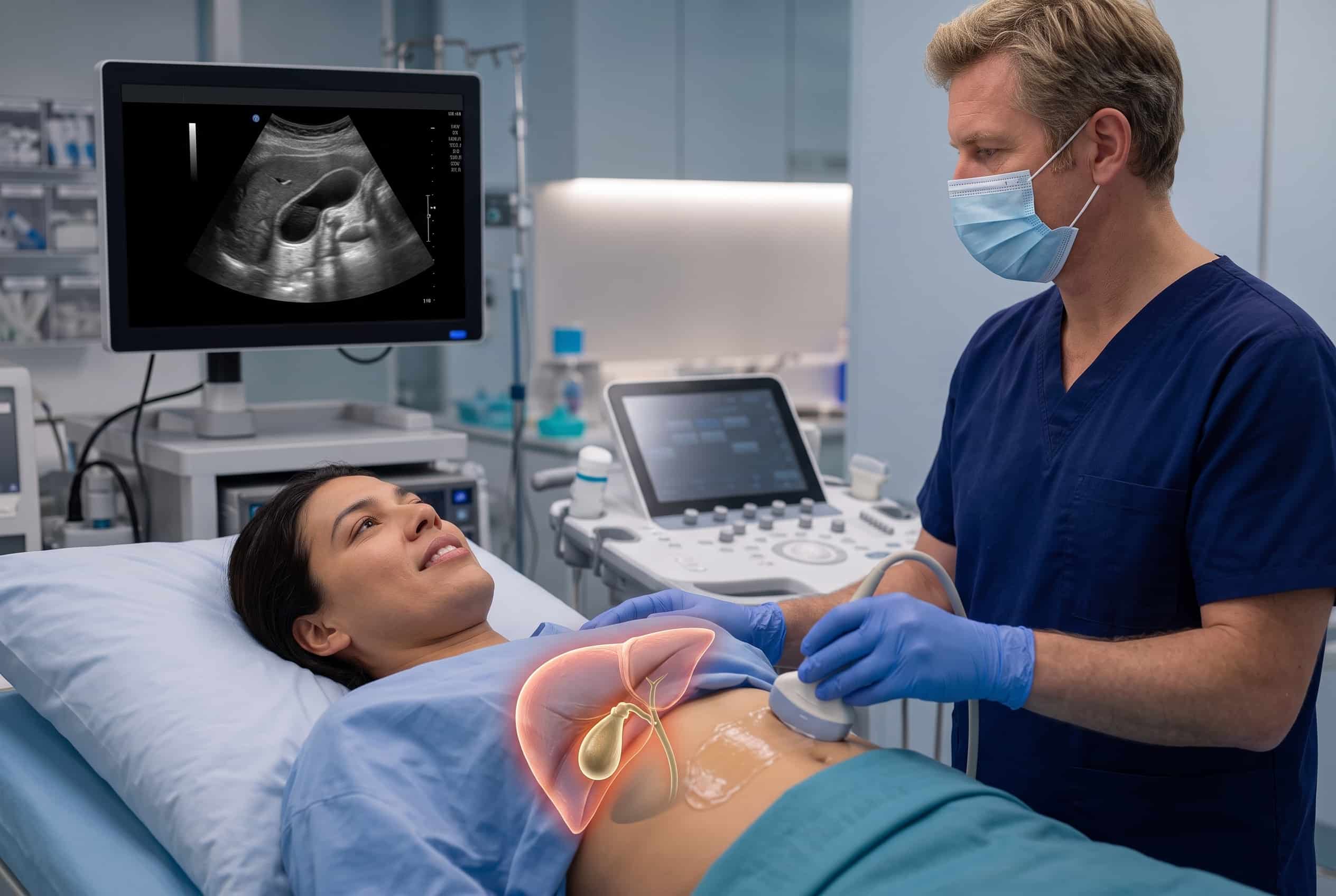
A gallbladder ultrasound is a safe imaging test that uses sound waves to create pictures of the gallbladder and nearby organs. It is often the first test used for patients with pain in the upper right side of the belly. This test helps find gallstones and signs of inflammation without using radiation.

How the Test Works
This test uses high-frequency sound waves to create clear pictures of your gallbladder, liver, and bile ducts without using radiation.
What it measures
• The presence of gallstones or gallbladder sludge
• The thickness of the gallbladder wall
• The size of the bile ducts
• The presence of fluid around the gallbladder
• The appearance of the liver and nearby abdominal structures
What it tells Dr. Dunn
• If gallstones are the likely cause of your abdominal pain
• If the gallbladder shows signs of active inflammation or infection
• If there is a blockage in the bile ducts that needs further evaluation
• If your symptoms might be caused by a different abdominal condition
• If you may need a HIDA scan to check gallbladder function
Why Doctors Use Gallbladder Ultrasound
Ultrasound is the first test doctors often use to look for gallstones or signs of gallbladder inflammation when you have pain under your right ribs.
Ultrasound is the most effective way to find stones that may be causing pain or nausea after you eat.
The test can show if the gallbladder wall is thickened or if there is fluid, which may mean the gallbladder is inflamed.
It helps check if the ducts that carry bile are wider than normal, which could suggest a blockage.
Your Experience During the Test
A gallbladder ultrasound is a noninvasive imaging exam that is usually not painful and takes about 30 minutes to complete at an imaging center.
During diagnostic endoscopy
• You will lie on an exam table for the procedure.
• A technologist will apply a warm gel to your upper abdomen.
• A handheld probe will be moved across your skin to capture images.
• You may be asked to hold your breath or change positions during the test.
• The test usually takes about 30 minutes and is not painful, though pressure may be uncomfortable.
During surgery
Gallbladder ultrasound is an important tool for surgical planning. It helps Dr. Dunn understand your anatomy and the extent of any gallbladder disease before a procedure. The results help determine if surgery is the best option for your symptoms.
Patients often find the test easy because it is quick and does not involve needles or radiation. You may feel slight pressure from the probe, but it is generally comfortable.
Why Ultrasound Results Matter
The results of an ultrasound help determine the next step in your care. Finding gallstones does not always mean you need surgery, but it helps explain symptoms like pain after meals. If the ultrasound is normal but you still have pain, it tells Dr. Dunn that more testing may be needed to find the cause.
Want to understand how this applies to your case?
Book a consultation and Dr. Dunn will walk you through exactly how EndoFLIP is used in your specific planned procedure.
Which Conditions Use This Test?
This imaging study is mainly used to evaluate gallbladder disease, gallstones, and other biliary conditions that may require surgical evaluation.
Used in these procedures
• Evaluating right upper abdominal pain
• Checking for gallstones or gallbladder sludge
• Diagnosing gallbladder inflammation (cholecystitis)
• Investigating abnormal liver or pancreas blood tests
• Planning for gallbladder removal surgery
Not used in these procedures
A gallbladder ultrasound is not used to measure how well the gallbladder empties or functions. It does not replace emergency care if you have severe pain, high fever, or jaundice. It may also miss certain stones or problems that require more detailed imaging like a CT scan or MRI.
Frequently Asked Questions

A gallbladder ultrasound is a safe and noninvasive imaging test that uses sound waves to create pictures of the gallbladder and nearby organs. It is often the first imaging step for patients experiencing right upper abdominal pain or suspected gallstones. This procedure helps identify structural changes like stones or inflammation that may explain your symptoms.
You may be asked to eat a fat-free meal the evening before your appointment and avoid eating or drinking for eight to twelve hours before the test. Fasting helps the gallbladder stay full and makes it easier for the imaging team to capture clear pictures. Always follow the specific instructions provided by your imaging center or clinician.
A technologist applies a clear gel to your skin and moves a handheld probe called a transducer over your upper abdomen. The transducer sends sound waves into the body and converts the returning echoes into images on a monitor. The test usually takes about thirty minutes and is generally painless, though you may feel slight pressure over tender areas.
Dr. Dunn reviews the ultrasound report alongside your symptoms, physical exam, and lab results to determine the best care plan. If the results are normal but symptoms persist, additional tests like a HIDA scan or CT scan may be recommended. You should seek urgent medical evaluation if you experience fever, jaundice, persistent vomiting, or severe abdominal pain.

