


Gastric Emptying Study
A gastric emptying study measures how quickly food leaves the stomach. Learn how Dr. Colin Dunn uses these results to evaluate gastroparesis, chronic nausea, and complex foregut symptoms in Los Gatos.
What is a gastric emptying study?
A gastric emptying study is a diagnostic test that measures how quickly food moves out of the stomach. It helps doctors see if the stomach is emptying too slowly or too quickly. This test is different from an upper endoscopy because it focuses on how the stomach functions over time rather than just looking at the stomach lining.

How the study works
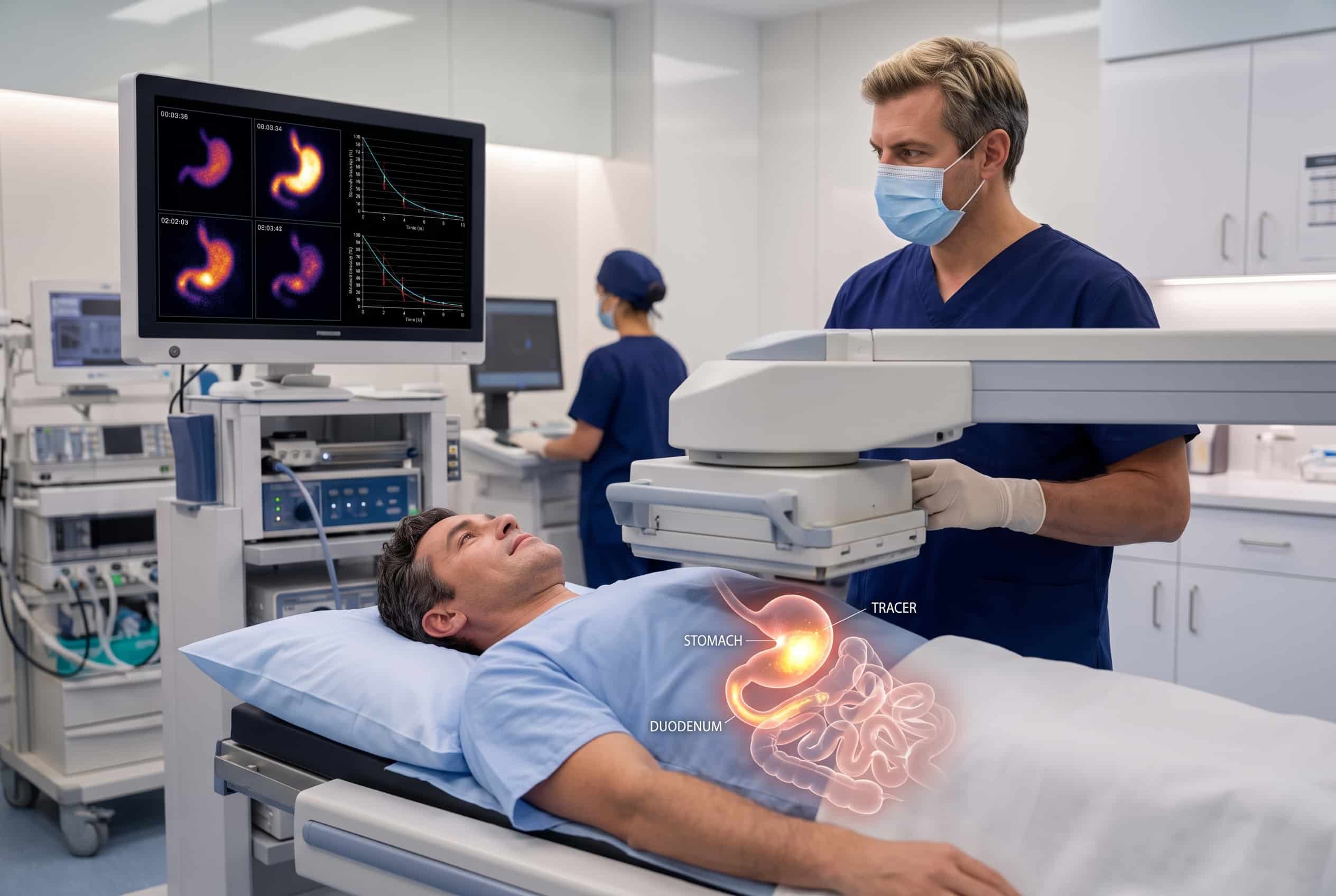
The test uses a standardized meal with a small amount of tracer and a special camera to measure how much food remains in the stomach over several hours.
What it measures
• The time it takes for food to leave the stomach
• Whether stomach emptying is delayed, which can indicate gastroparesis
• Whether stomach emptying is too fast, which may suggest dumping syndrome
• How stomach function compares to normal emptying patterns
What it tells Dr. Dunn
• If slow stomach emptying is the cause of symptoms like nausea or early fullness
• Whether a patient's symptoms are related to stomach function rather than acid reflux
• The severity of any emptying delay to help plan the next steps in care
• If a patient may be a candidate for specialized gastroparesis treatments
When this test is used
A gastric emptying study is used when symptoms suggest that food is not moving through the stomach at a normal pace.
It provides objective evidence to help diagnose gastroparesis in patients with chronic nausea and vomiting.
It helps determine if reflux-like symptoms are related to slow stomach emptying instead of GERD alone.
It evaluates delayed emptying in patients with diabetes who have unexplained upper digestive symptoms.
What to expect during the test
The test is usually not painful and involves eating a light meal followed by imaging over several hours.
During diagnostic endoscopy
• You will eat a light meal, such as eggs and toast, that contains a small amount of radioactive tracer.
• A special camera will take images of your stomach to track the meal as it moves.
• Images are usually taken at several time points over two to four hours.
• You should tell the testing team about any food allergies or if you are pregnant before the test begins.
• Most patients can return to their normal daily activities once the imaging is complete.
During surgery
A gastric emptying study is not used during a surgical procedure. It is a diagnostic test performed beforehand to help Dr. Dunn understand your stomach function. These results are used to plan the right treatment and to help decide if certain procedures, such as GPOEM, are appropriate for your condition.
The scan itself is not painful, though some patients find it challenging to finish the required meal if they already feel full or nauseated.
Why stomach emptying matters
Stomach emptying matters because problems in the stomach can cause symptoms that feel like other conditions, such as acid reflux. If the stomach does not empty properly, it can lead to persistent nausea, bloating, and discomfort. This test helps determine if stomach emptying is contributing to your symptoms rather than just treating the surface signs.
Want to understand how this applies to your case?
Book a consultation and Dr. Dunn will walk you through exactly how EndoFLIP is used in your specific planned procedure.
Procedures and evaluations
This study is an important part of the evaluation for patients considering advanced treatments for gastroparesis, such as the GPOEM procedure.
Used in these procedures
• Gastroparesis
• Chronic nausea and vomiting
• Dumping syndrome
• Diabetes-related stomach dysfunction
• Complex reflux symptoms
Not used in these procedures
A gastric emptying study is not used to look for physical blockages, ulcers, or inflammation in the digestive tract. It does not replace an upper endoscopy or imaging like a CT scan, which are needed to see the actual structure of the stomach. Additionally, it is not a substitute for reflux testing if the primary goal is to measure acid levels in the esophagus.
Frequently Asked Questions

A gastric emptying study is a diagnostic test that measures how quickly food leaves the stomach. The results help determine if the stomach is moving food at a normal pace or if emptying is delayed or abnormally rapid. This information is useful for evaluating symptoms such as chronic nausea, bloating, and early fullness.
Preparation often includes fasting for a period of time so the stomach is empty at the start of the test. A healthcare provider will also review current medications because some drugs can affect stomach emptying speed. Patients should discuss any food allergies, diabetes, or pregnancy concerns with the testing team in advance.
The test begins with a standardized light meal that contains a small amount of a radioactive tracer. A special camera then takes images of the stomach at specific time points, often over two to four hours, to track how the meal moves. The scan itself is not usually painful, though some patients may find it difficult to finish the meal if they already feel full or nauseated.
The results indicate whether the stomach empties at a normal, slow, or rapid rate. Slow emptying may suggest gastroparesis, while rapid emptying may suggest dumping syndrome. These findings help the clinical team understand the cause of symptoms and determine the most appropriate next steps in care.

