


EndoFLIP
EndoFLIP testing in Los Gatos helps evaluate swallowing problems, achalasia, and esophageal function. Dr. Colin Dunn provides advanced diagnostics in Silicon Valley.
What is EndoFLIP?
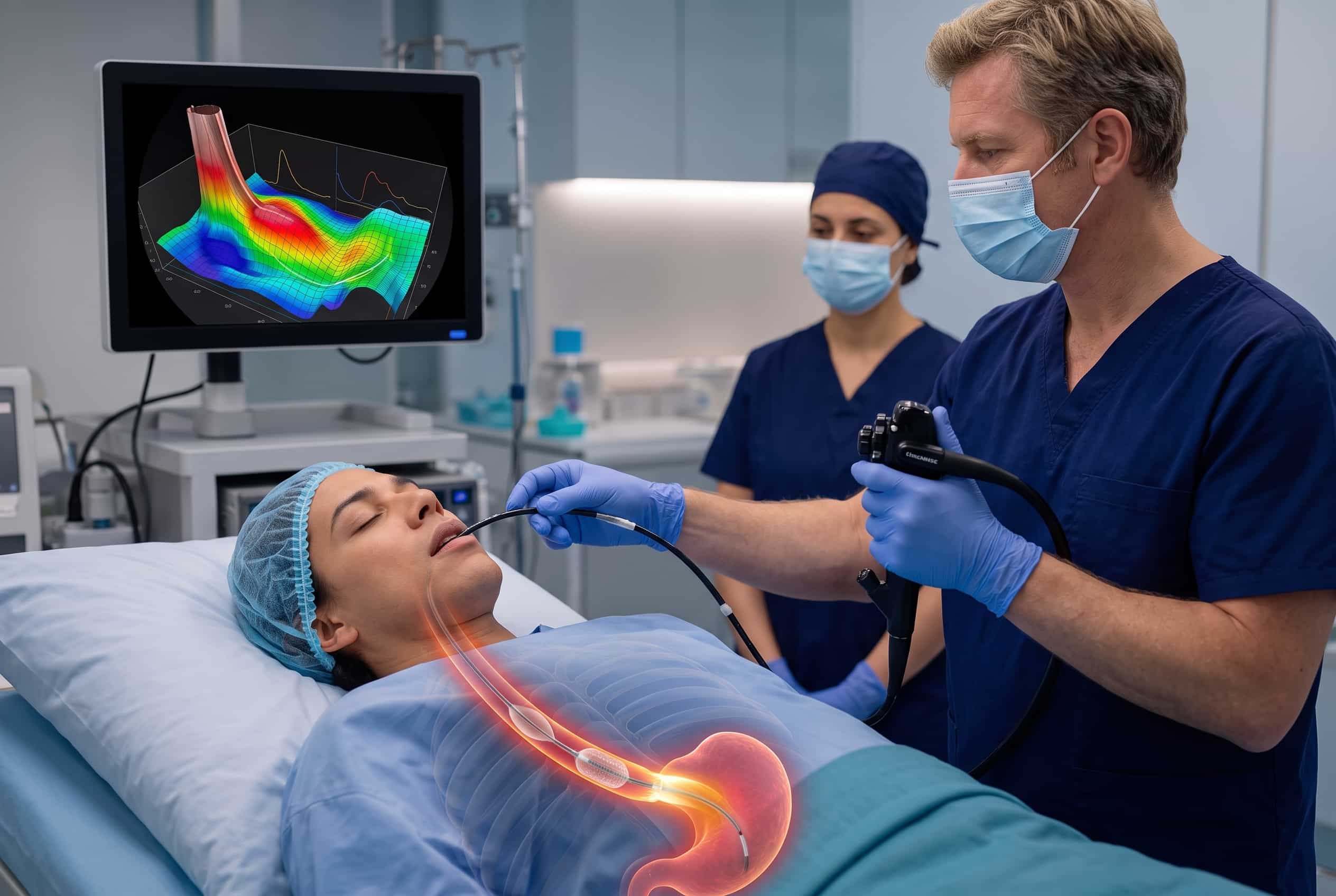
EndoFLIP stands for endolumenal functional lumen imaging probe. It is an advanced tool that measures the width and pressure inside the esophagus. This helps a specialist see if the esophagus is stretching, opening, and moving the way it should.
This test is often used when a patient has trouble swallowing or symptoms that other tests have not fully explained. While it can sometimes diagnose a problem on its own, it usually suggests a problem that requires more testing to confirm. It is typically one part of a complete evaluation to understand the cause of your symptoms.

How the Test Works
The test uses a thin tube with a sensor-covered balloon to measure pressure and dimensions inside the esophagus while the patient is sedated.
What it measures
• The width of the esophagus to check for narrowing.
• Pressure levels to see how the esophageal wall responds to stretching.
• The opening where the esophagus meets the stomach.
• The stiffness of the esophageal wall.
What it tells Dr. Dunn
• Whether the esophagus is too tight, too stiff, or not moving normally.
• If the muscle between the esophagus and stomach (the lower esophageal sphincter) is relaxing properly.
• Real-time data that helps the doctor make decisions during an endoscopy or surgery.
• How your symptoms relate to the physical function of your esophagus.
Common Uses for EndoFLIP
EndoFLIP helps evaluate swallowing disorders, supports achalasia diagnosis, and provides functional data for patients considering surgery.
EndoFLIP helps identify if swallowing problems are caused by abnormal tightness or poor muscle movement in the esophagus.
The test measures the stiffness and opening of the lower esophageal sphincter to help diagnose achalasia and track treatment results.
For patients with reflux or hiatal hernias, EndoFLIP provides functional details that help the surgeon choose the best treatment plan.
Your Procedure Experience
EndoFLIP is usually performed during an upper endoscopy, which means you will be sedated or under anesthesia during the test.
During diagnostic endoscopy
• You will receive instructions to fast before the test and will need a ride home afterward.
• You are made comfortable with sedation while the flexible camera and balloon catheter are used.
• The balloon is gently inflated to record measurements, a process that takes about 15 minutes.
• You will rest in a recovery area while the sedation wears off before you are discharged.
During surgery
EndoFLIP can provide real-time information during certain procedures, such as a Heller myotomy or POEM. This helps the surgeon evaluate the esophageal opening while the treatment is happening. For most patients, however, it is used as a diagnostic tool before surgery is considered.
The procedure is typically not painful because of the sedation used. Some patients may have a mild sore throat afterward, but serious side effects are rare.
Why It Matters
A successful treatment plan depends on an accurate diagnosis. EndoFLIP is integrated with other tools like manometry and reflux monitoring to provide a complete view of your health. This approach helps ensure that you receive the most appropriate care for your specific condition.
Want to understand how this applies to your case?
Book a consultation and Dr. Dunn will walk you through exactly how EndoFLIP is used in your specific planned procedure.
Conditions Evaluated
This technology is used for patients with swallowing disorders, suspected achalasia, complex reflux, or those who have had previous esophageal surgery.
Used in these procedures
• Achalasia and other motility (muscle movement) disorders
• Dysphagia (difficulty swallowing)
• GERD and hiatal hernia evaluation
• Eosinophilic esophagitis
• Post-surgical follow-up for anti-reflux procedures
Not used in these procedures
EndoFLIP is not used as a routine test for every patient with GERD. It does not replace esophageal manometry, as both tests provide different and important information. Additionally, it is not used by itself to diagnose eosinophilic esophagitis.
Frequently Asked Questions

EndoFLIP is an advanced diagnostic tool that measures the width and pressure of the esophagus. It helps the specialist understand how well the esophagus opens and moves food into the stomach. This evaluation is often recommended for patients with swallowing problems, chronic reflux, or suspected achalasia.
Your care team will provide specific instructions, which typically include fasting for a period of time before the procedure. Because the test is performed under sedation or anesthesia, you must arrange a ride home afterward. Following these preparation steps helps ensure the procedure is safe and the results are accurate.
The test is performed during an upper endoscopy while you are sedated to ensure your comfort. A thin tube with a sensor-covered balloon is placed into the esophagus and gently inflated to record pressure and volume data. Most patients do not feel any pain during the procedure, although a mild sore throat is possible afterward.
You will rest in a recovery area until the sedation wears off and then go home with post-procedure instructions. Dr. Dunn will review the measurement data in the context of your symptoms, medical history, and other diagnostic findings. Depending on the results, your next steps may include medical therapy, additional testing, or a discussion of surgical treatment options.

