


LINX Procedure
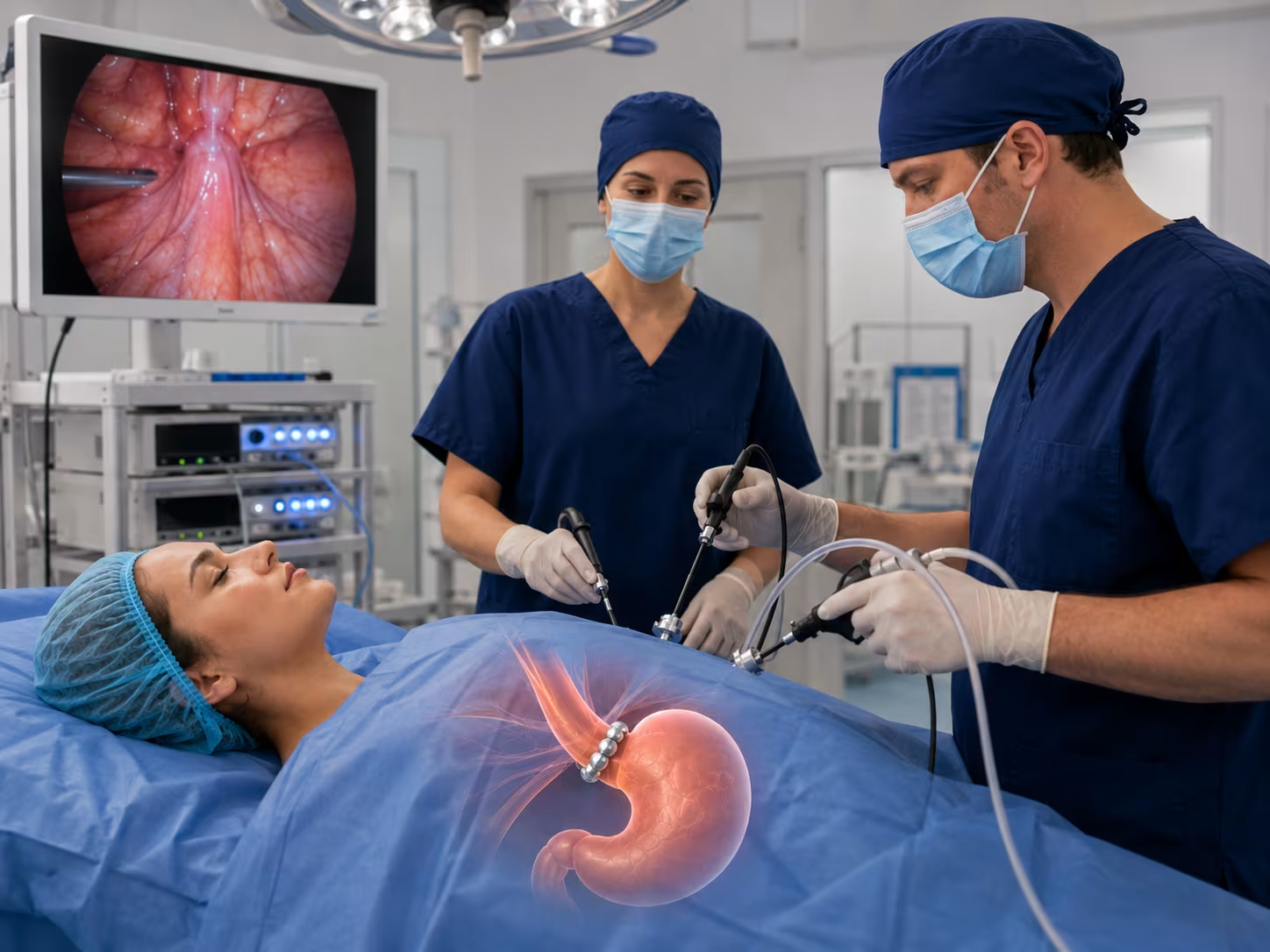
The LINX procedure is a surgical treatment for GERD that uses a magnetic ring to help the esophageal valve stay closed and prevent acid reflux.
Understanding the LINX Procedure
The LINX procedure is a surgical option for people with GERD, a condition where stomach acid flows back into the esophagus. It uses magnetic sphincter augmentation, involving a small ring of magnetic beads placed around the lower esophageal sphincter. The magnets help the valve stay closed to prevent reflux while opening to allow food to pass when you swallow.

Who Might Consider the LINX Procedure
LINX may be considered for people who have testing showing abnormal reflux, ongoing symptoms despite medicine, or those who want an alternative to long-term medication. It is usually for persistent, documented reflux due to a mechanical problem.
The LINX Procedure Process
LINX is usually performed using laparoscopic surgery under general anesthesia to place the magnetic device.
The surgeon creates a safe laparoscopic working space to view the area.
The surgeon evaluates and repairs the hiatus if a hiatal hernia is present.
The magnetic device is sized to fit your specific esophageal sphincter.
The magnetic ring is placed around the lower esophageal sphincter.
The surgeon confirms the device position before closing the incisions.
Preparing for LINX Surgery
LINX should be based on objective evidence, not symptoms alone, to ensure it is the right choice for your anatomy.
Required before surgery
• Upper endoscopy to look for esophagitis, Barrett's, strictures, and hernia.
• Reflux testing (pH or impedance) to measure acid exposure and reflux events.
• Esophageal manometry to check muscle function and rule out achalasia.
• Barium swallow (esophagram) to show swallowing and hernia size.
Sometimes also ordered
• EndoFLIP to measure the esophageal opening and stretchability.
Who Is a Candidate for LINX?
A consultation is a careful review of your history and tests to determine if LINX is the safest plan for your symptoms.
Likely good candidates
• Patients with testing showing abnormal reflux.
• Patients with ongoing heartburn or regurgitation despite medicine.
• Patients seeking an alternative to long-term acid-suppression medication.
• Patients with suitable esophageal movement and anatomy for a device-based option.
May need further evaluation
• Known or suspected allergy to titanium, stainless steel, nickel, or ferrous metals.
• Severe esophageal motility disorders, such as achalasia.
• Significant recent or frequent swallowing difficulty (dysphagia).
• Esophageal strictures or large anatomic abnormalities.
• BMI greater than 35, pregnancy or planned pregnancy, and age under 21.
Not sure if you qualify?
Dr. Dunn reviews every case personally. Book a consultation and he'll give you an honest answer — even if that answer is "let's get more testing first."
Risks to be aware of
Recovery varies by patient and depends on whether a hiatal hernia repair was also performed. LINX is a permanent implant that requires careful consideration of its benefits and risks.
Common short-term side effects (expected and temporary)
Expected in recovery
• Temporary swallowing difficulty (dysphagia).
• Nausea, vomiting, chest pain, or bloating.
• Esophageal spasms or food blockage.
Serious risks (uncommon)
• Device erosion or migration.
• Persistent swallowing difficulty requiring dilation or device removal.
• Surgical risks including injury to nearby organs and anesthesia-related issues.
What recovery looks like
Contact your surgeon for fever, worsening pain, severe chest pain, or breathing trouble.
Some patients go home the same day, while others may need a short period of observation.
Diet often starts with small, frequent solid meals to help the device move.
Most people take five to fourteen days off work, depending on the job.
Temporary swallowing difficulty is common and usually improves during this period.
Avoid heavy lifting and strenuous activity for four to six weeks or as advised.
What to expect long-term
LINX may reduce reflux symptoms and medication needs while preserving the ability to belch or vomit. Patients must follow MRI restrictions, as the device is only MR Conditional under certain conditions.
Questions about LINX Procedure

The LINX procedure is often considered for people who have persistent heartburn or regurgitation despite taking daily reflux medication. It is a surgical option for those who want an alternative to long-term acid-suppression drugs and have objective testing that shows abnormal reflux. However, it is not right for everyone. For example, individuals with a known allergy to titanium, nickel, or stainless steel should not receive this device. Dr. Dunn will also review your body mass index, anatomy, and muscle function to ensure that a magnetic implant is the safest choice for your specific situation. This procedure is usually not recommended for patients who only have occasional mild symptoms.
Before choosing the LINX procedure, it is vital to have objective evidence that reflux is truly present. Testing helps confirm that your symptoms are caused by acid exposure rather than another condition. One of the most important tests is esophageal manometry, which measures how well your muscles push food down. Because the LINX device must open when you swallow, your esophagus must have enough strength to function correctly with the ring in place. Other tests, like an upper endoscopy or a barium swallow, allow Dr. Dunn to check for hiatal hernias or other structural issues that might change your surgical plan and ensure the most durable outcome for you.
During the LINX procedure, a surgeon uses laparoscopic techniques to place a small ring of magnetic beads around the lower esophageal sphincter. This ring acts as a support for the natural muscle valve between your stomach and esophagus. The magnetic attraction helps the valve stay closed to prevent stomach acid or contents from flowing backward into the esophagus. When you swallow food or liquids, the pressure from the swallow causes the magnetic beads to slide apart, allowing the ring to open so food can pass into the stomach. Once the food has passed, the magnets pull the ring back together to restore the reflux barrier and protect your esophageal lining from damage.
Most patients can return home the same day or after a short period of observation. You should plan to take five to fourteen days off work and avoid heavy lifting for at least four to six weeks. A common part of recovery is temporary swallowing difficulty, which usually improves as you heal. To help the device move and settle correctly, you will likely start a diet of small, frequent solid meals shortly after surgery. While many people may find their symptoms improve, it is important to remember that some patients may still need reflux medication or experience side effects like chest pain, bloating, or nausea during the initial healing phase.

