


Hernia Repair Surgery
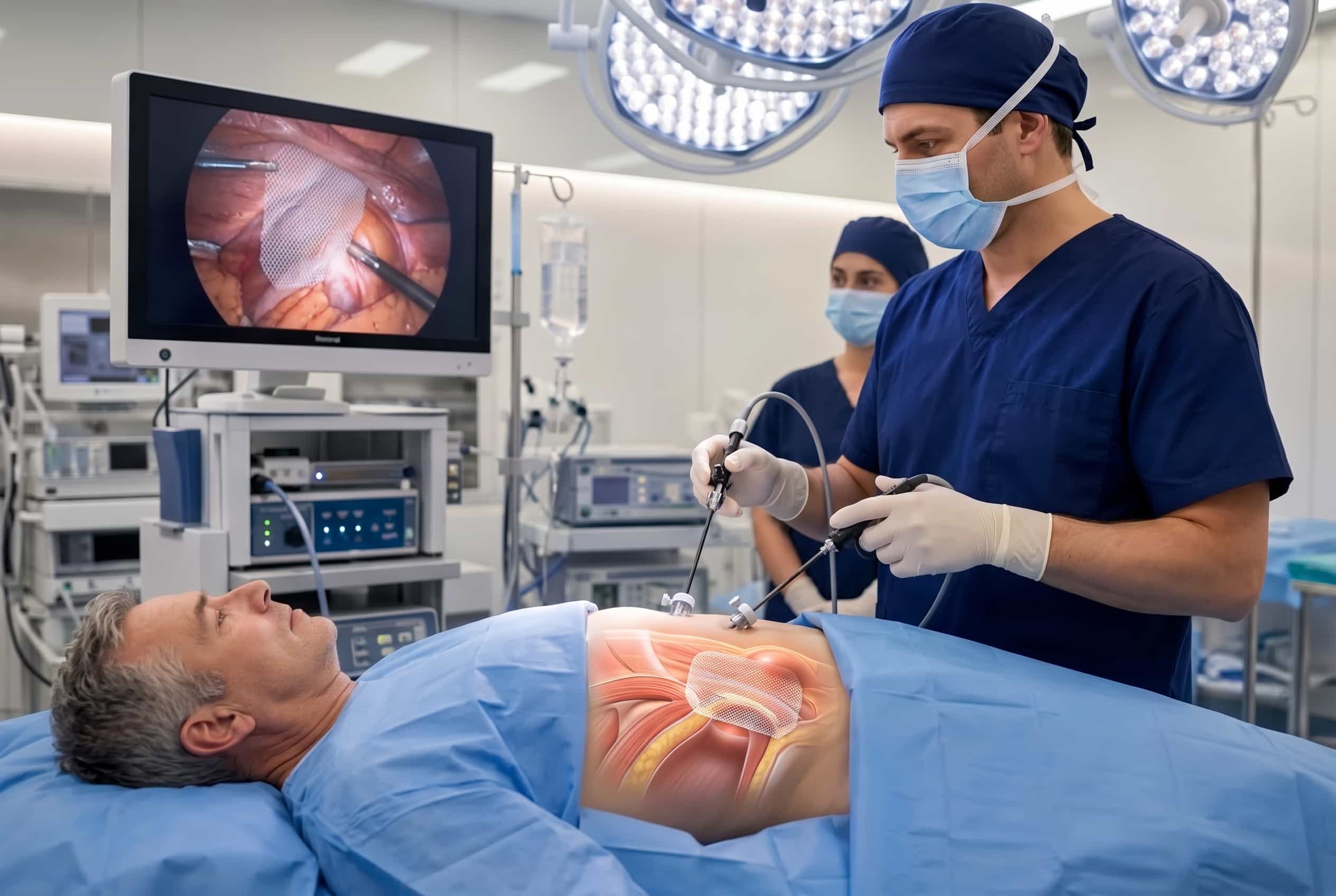
Hernia repair surgery puts the tissue back and reinforces the weak area. Repairs can be done through an open incision, laparoscopy, or with robotic instruments.
What is hernia repair surgery?
A hernia is a gap or weakness in the abdominal wall that lets tissue bulge out, such as fat, lining, or intestine. Hernia repair surgery closes or reinforces that weak spot to reduce the chance the hernia returns. Surgeons may use surgical mesh, a soft patch, to strengthen the repair.

Choosing the right repair approach
There are three main approaches: open, laparoscopic, and robotic repair. The best option depends on the hernia type, size, prior surgeries, body shape, and other health factors. Minimally invasive repair can offer less pain and smaller scars for selected patients, though some cases may require conversion to an open procedure for safety.
The surgical process
Steps vary by case, but typically follow a standard sequence to ensure safety and effectiveness.
Confirm the plan, medications, and allergies.
General anesthesia is usually used for minimally invasive repairs, while some open repairs can use local or regional anesthesia.
The surgeon reaches the hernia and returns protruding tissue to its proper place when safe. The weakened area is then repaired, often with mesh.
Incisions are closed and dressings are applied.
You are monitored until awake, stable, and ready to go home or stay for observation.
Preparing for surgery
A consultation involves reviewing your symptoms, exam, imaging, prior operations, and health factors to create a personalized treatment plan.
Required before surgery
• Physical examination
• Review of symptoms and medical history
• Discussion of prior operations and health factors
Sometimes also ordered
• CT scan of the abdomen and pelvis
• Imaging for large, recurrent, or complex hernias
Who is a candidate for hernia repair?
Surgery is usually recommended when the hernia causes pain, pressure, or limits daily activities.
Likely good candidates
• Hernias causing pain or pressure
• Hernias that are getting larger
• Hernias limiting work or daily activities
• Hernias that are hard to push back in
• Recurrent hernias after a prior repair
May need further evaluation
• Small, painless hernias that can be safely watched
• Patients with high anesthesia risk where watchful waiting is safer
Not sure if you qualify?
Dr. Dunn reviews every case personally. Book a consultation and he'll give you an honest answer — even if that answer is "let's get more testing first."
Risks to be aware of
Recovery depends on hernia type, approach, mesh placement, anesthesia, job demands, and overall health. All surgery carries risks, and factors like smoking or obesity can raise these risks.
Common short-term side effects (expected and temporary)
Expected in recovery
• Bleeding or hematoma
• Infection of the incision or deeper tissues
• Seroma (fluid collection near the repair)
• Temporary trouble emptying the bladder
• Soreness and swelling for days or weeks
Serious risks (uncommon)
• Injury to nearby structures like bowel, bladder, or blood vessels
• Chronic pain lasting longer than three months
• Hernia recurrence
• Anesthesia-related risks to heart, lungs, or airway
• Conversion from minimally invasive to open surgery
What recovery looks like
Follow individualized pain control plans and specific discharge instructions given by the surgeon.
Rest, light walking, and pain control. Early walking is encouraged to help circulation.
Soreness and swelling are common. Nonphysical desk work may be possible for some patients.
Continued recovery with gradual return to light activity. Driving is possible once mobile and off narcotic pain medicines.
Follow-up visit to check healing, swelling, pain, and activity progression.
Heavy lifting and strenuous work may be restricted for several weeks for most patients.
What to expect long-term
The goal of repair is a durable fix that reduces the chance of recurrence. Long-term success is aided by maintaining a healthy weight and not smoking. Most patients return to full activity after the initial recovery period.
Questions about hernia repair

Deciding to have hernia repair surgery depends on your symptoms and the hernia’s behavior. Most doctors recommend surgery if the hernia causes pain, pressure, or limits your daily activities. If the bulge is getting larger or becomes difficult to push back into place, repair is often necessary to prevent future problems. Small hernias that do not cause any pain can sometimes be watched closely instead of being fixed right away. However, you should seek immediate care if the area becomes very painful, turns dark in color, or if you experience nausea. A consultation helps determine if your specific situation requires surgery or if watchful waiting is a safe option for you.
Preparing for your consultation involves gathering information about your health history and symptoms. You should bring any prior operative reports and imaging results, such as CT scans, if they are available. It is also helpful to provide a list of your current medications and details about any past hernia repairs. During the visit, your surgeon will review your symptoms, perform a physical exam, and discuss how the hernia affects your work or daily activities. While imaging is not always required, a CT scan may be used for large or complex hernias to help guide the surgical plan. This thorough review ensures that the treatment approach is personalized to your specific health needs and goals.
During the procedure, the surgeon returns the protruding tissue to its proper place and reinforces the weak spot in your abdominal wall. This is often done using a soft surgical mesh, which acts like a patch to strengthen the area and reduce the chance of the hernia returning. The surgery can be performed through one larger incision or several small ones using a camera and special instruments. The best approach depends on the type of hernia and your overall health. Most of these operations are outpatient procedures, meaning you can often go home the same day. You will receive anesthesia to keep you comfortable, and the surgical team will monitor you closely until you are awake and stable.
Recovery varies for everyone, but most people can expect some soreness and swelling for a few days or weeks. During the first 24 hours, you should focus on resting and managing any discomfort. Early walking is encouraged to help your circulation and support healing. Many patients can return to nonphysical desk work within a few days, but you will likely need to avoid heavy lifting and strenuous activities for several weeks. While complications are uncommon, risks can include minor bleeding, infection, or fluid collection near the repair site. Following your discharge instructions and attending follow-up visits are important steps to ensure you are healing well and can safely return to your normal daily routine and exercise.

