


Fundoplication
Fundoplication surgery strengthens the valve between your stomach and esophagus to reduce reflux and treat symptoms of GERD or hiatal hernia.
What is fundoplication?
Fundoplication is an operation that strengthens the valve between your stomach and esophagus. The upper stomach, called the fundus, is wrapped around the lower esophagus. This helps the valve close better and reduce reflux.
The valve area is the lower esophageal sphincter. It opens to let food into the stomach and then closes to stop backflow. If this valve is weak, stomach acid can move up into the esophagus.

Types of fundoplication: Nissen, Toupet, Dor
There are different ways to wrap the stomach around the esophagus. A full wrap can give a stronger barrier to reflux. A partial wrap may lower the risk of swallowing problems. The choice depends on your anatomy, esophageal movement, swallowing history, and Dr. Dunn’s judgment.
• Nissen fundoplication is a full, 360-degree wrap.
• Toupet fundoplication is a partial, 270-degree wrap placed behind the esophagus.
• Dor fundoplication is a partial, 180-degree wrap placed in front of the esophagus.
What happens during laparoscopic fundoplication?
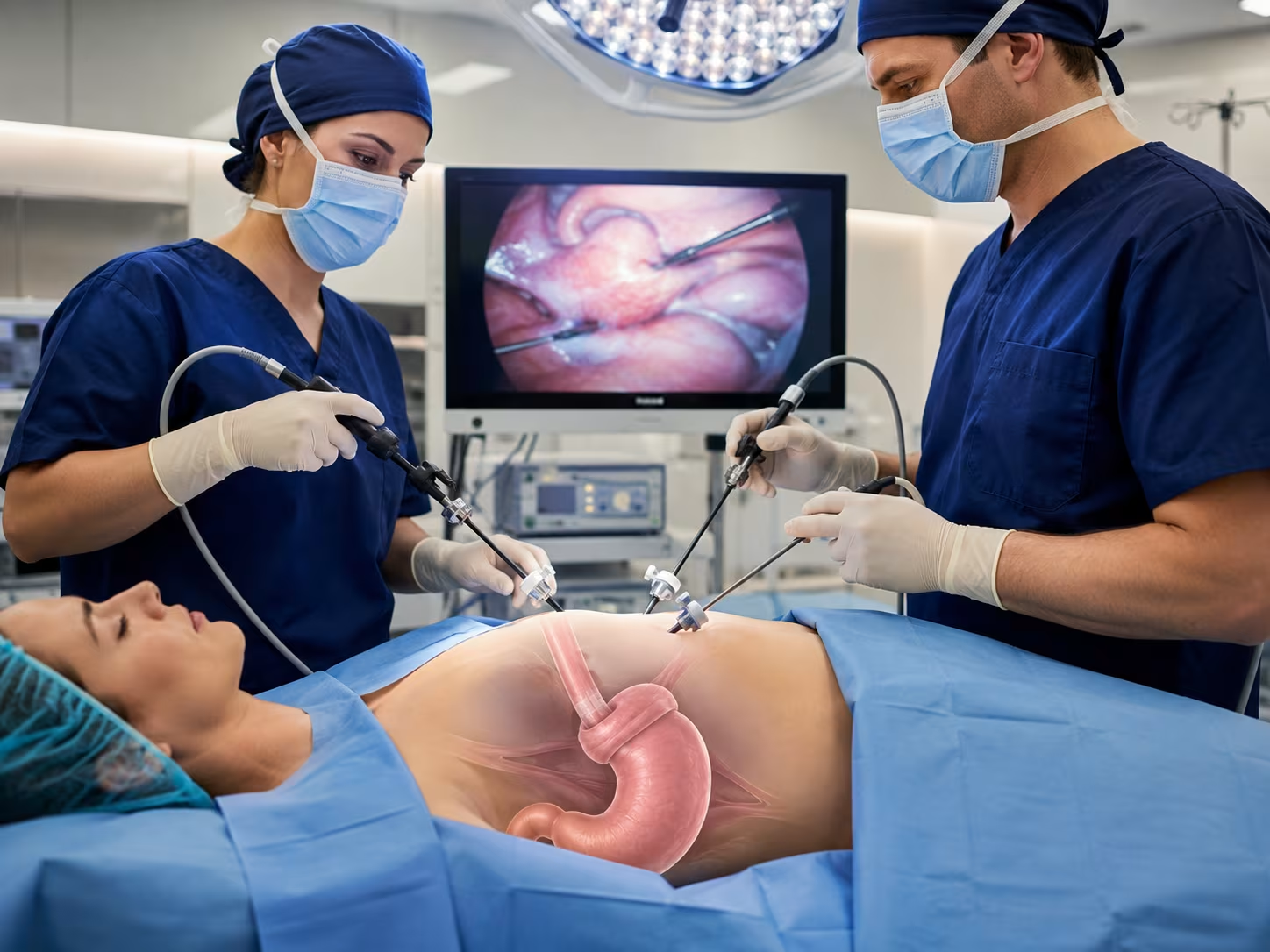
Most fundoplications are performed laparoscopically under general anesthesia using small incisions and small instruments.
You are asleep under general anesthesia during the procedure.
The surgeon makes a few small abdominal incisions to insert a camera and small instruments.
If a hiatal hernia is present, it is returned to the abdomen and the diaphragm opening is tightened.
The upper stomach is wrapped around the lower esophagus in the chosen style (Nissen, Toupet, or Dor).
The procedure is completed and you move into early recovery.
Why testing matters before fundoplication
Fundoplication should be planned based on test results to confirm reflux and ensure the esophagus is strong enough for surgery.
Required before surgery
• Upper endoscopy to look for inflammation, Barrett’s esophagus, or hiatal hernia.
• Reflux testing (pH or pH-impedance) to measure acid exposure and confirm GERD.
• Esophageal manometry to measure the strength and coordination of esophageal muscles.
Sometimes also ordered
• Barium swallow (esophagram) to show anatomy, hernia size, and swallowing mechanics.
• EndoFLIP to measure how the esophagus opens and stretches.
Who may be a candidate for fundoplication surgery?
Surgery is most useful when tests and symptoms point to a mechanical reflux problem rather than occasional heartburn.
Likely good candidates
• Patients with confirmed GERD through testing.
• Persistent regurgitation despite medical care.
• Reliance on medication and desire for a long-term option.
• Large or symptomatic hiatal hernia.
• Reflux complications like severe esophagitis or Barrett’s esophagus.
May need further evaluation
• Occasional heartburn that can be managed with lifestyle changes.
• Symptoms not proven to be caused by reflux on testing.
Not sure if you qualify?
Dr. Dunn reviews every case personally. Book a consultation and he'll give you an honest answer — even if that answer is "let's get more testing first."
Risks to be aware of
Recovery varies by patient and procedure details. Many patients go home the same day or stay one night. You will receive specific instructions about activity and diet.
Common short-term side effects (expected and temporary)
Expected in recovery
• Temporary difficulty swallowing as swelling goes down.
• Bloating, increased gas, or inability to belch.
Serious risks (uncommon)
• Bleeding or infection.
• Anesthesia reaction.
• Injury to nearby organs.
• Symptoms returning over time.
What recovery looks like
Call your doctor for fever, worsening pain, increasing abdominal swelling, or inability to eat or drink.
Many patients go home the same day or stay one night. Light walking is encouraged soon after surgery.
Activity is restricted, and light walking is encouraged. You will follow a liquid or soft diet.
Diet advances as swallowing improves. Heavy lifting and straining are restricted.
Most patients begin returning to light daily activities, though heavy lifting remains restricted.
Full activities usually resume by about four weeks, depending on surgeon instructions.
What to expect long-term
Fundoplication can reduce reflux and improve heartburn, regurgitation, and sleep disruption. Some patients stop medication, while others may still need it occasionally.
Questions about Fundoplication

Fundoplication is generally considered for people with confirmed chronic acid reflux or mechanical issues like a hiatal hernia. Dr. Colin Dunn evaluates patients who still have symptoms despite medical care, such as stomach contents returning to the mouth. You may be a candidate if you rely heavily on daily medications and want a longer-term surgical option to manage your reflux. It is also an option for those with complications like severe irritation of the food pipe or Barrett’s esophagus. However, this surgery is not intended for occasional heartburn. A thorough consultation helps determine if your specific symptoms and body structure make surgery the most appropriate next step for your health and comfort.
Before having fundoplication surgery, several tests are necessary to ensure it is the right choice for you. These tests help Dr. Dunn understand your unique body structure and how severe your reflux is. An upper endoscopy lets the surgeon look for irritation or a hiatal hernia using a small camera. Reflux testing measures acid levels to confirm a diagnosis. A muscle strength test for your food pipe is also vital to help decide which type of wrap is safest for you. Additionally, a special X-ray called a barium swallow shows how you swallow. These clear results are essential for creating a custom surgical plan that addresses the true cause of your symptoms.
Fundoplication involves wrapping the upper part of the stomach around the lower food pipe to strengthen the valve that stops reflux. There are three main styles: Nissen, Toupet, and Dor. A Nissen wrap goes all the way around for a very strong barrier. Toupet and Dor are partial wraps that may reduce the risk of future swallowing problems. Most of these operations use small incisions and a camera, though a larger opening is sometimes used for safety. If a hiatal hernia is present, the surgeon will typically fix it before creating the wrap. The specific technique chosen depends on your test results, muscle movement, and overall health goals.
Recovery after fundoplication varies, but many patients return home the same day or after one night in the hospital. You will start with a liquid or soft food diet, slowly adding more foods as your swallowing improves. It is common to have temporary trouble swallowing or bloating as internal swelling goes down. While light walking is encouraged early on, you must avoid heavy lifting for several weeks to allow proper healing. While many people see great improvement in their symptoms, surgery does carry risks like infection or the return of reflux over time. Dr. Dunn will provide specific instructions on activity levels and when to call the office if you have concerns.

