
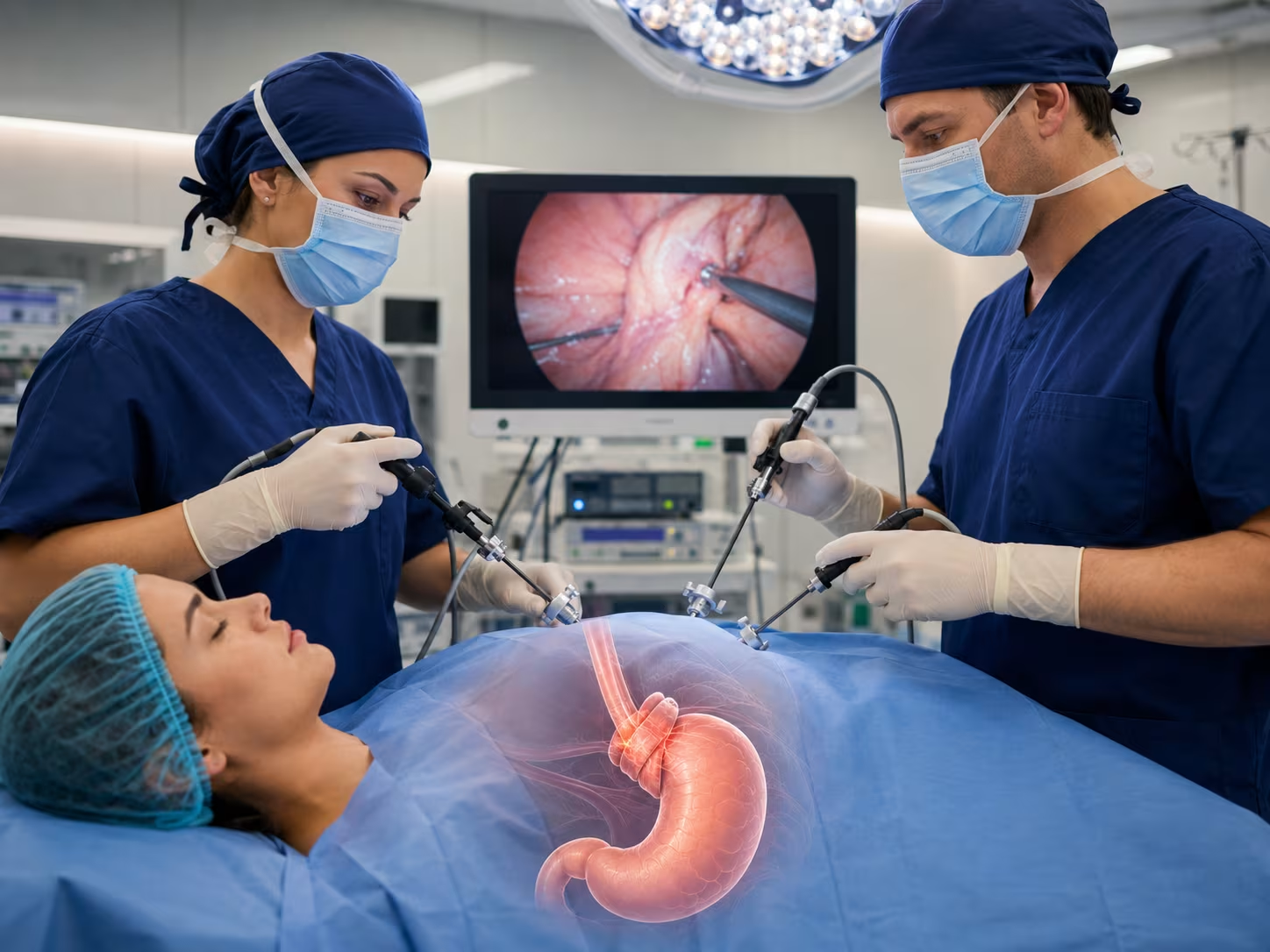


Anti-Reflux Surgery
Anti-reflux surgery may help selected people with proven GERD, regurgitation, or a hiatal hernia after careful testing and evaluation.
What is anti-reflux surgery?
Anti-reflux surgery strengthens the barrier between the stomach and esophagus. The goal is to reduce reflux of acid and food.
Different operations support that barrier in different ways. Common options include fundoplication, LINX, and hiatal hernia repair when a hernia is contributing to reflux.
A consultation does not commit you to surgery. Dr. Dunn reviews your symptoms, testing, anatomy, and goals before discussing whether a procedure is appropriate.

How we choose the right reflux procedure
There is no single anti-reflux operation that fits everyone. The best choice matches your diagnosis, test results, anatomy, swallowing function, and goals.
Fundoplication: The upper stomach is wrapped around the lower esophagus to reinforce the valve. A full or partial wrap may be selected based on esophageal movement and swallowing concerns.
LINX: A ring of magnetic beads supports the lower esophageal valve and opens for swallowing. It may fit selected patients with confirmed reflux and appropriate esophageal movement.
Hiatal hernia repair: If part of the stomach has moved into the chest, repair may return it to the abdomen and tighten the diaphragm opening. It is often planned with an anti-reflux procedure.
Endoscopic options: Some options are done through the mouth without abdominal incisions, but they have limited applications and are selected case by case.
What the treatment process may involve
Anti-reflux surgery is usually considered only when testing shows that reflux is causing symptoms. The care path begins with a consultation, then moves through any needed testing, procedure planning, recovery guidance, and follow-up.
Dr. Dunn reviews your symptoms, daily impact, medications, prior endoscopy, reflux testing, manometry, imaging, and surgeries.
Testing helps confirm reflux and show whether a hiatal hernia, swallowing issue, or another cause is contributing to symptoms.
Your diagnosis, anatomy, esophageal movement, and goals help determine whether a procedure is appropriate and which option may fit.
Many anti-reflux procedures use minimally invasive techniques, but the approach depends on the procedure and your individual needs.
Your team provides diet, activity, medication, and follow-up guidance tailored to your surgery and health.
Preparing for surgery
Your team will review testing, medicines, arrival instructions, and any food or drink restrictions. If testing is incomplete, the next step may be additional diagnostics rather than surgery.
Required before surgery
• A careful review of symptoms, medications, and prior testing.
• Upper endoscopy to inspect the esophagus and stomach when needed.
• Reflux testing to measure acid exposure or reflux events.
• Esophageal manometry to assess movement and guide procedure selection.
Sometimes also ordered
• Barium swallow or esophagram to review anatomy and swallowing.
• EndoFLIP to measure how the esophagus opens and stretches in selected cases.
• Additional testing when symptoms or anatomy are unclear.
Who should consider a consultation?
A reflux consultation can help when heartburn, regurgitation, nighttime symptoms, or a hiatal hernia affect daily life. It is also useful when medication does not provide enough relief, symptoms return after medication stops, or you want to understand whether a procedure could fit. Not everyone with reflux needs surgery. Many people improve with weight management, meal timing, trigger-food awareness, raising the head of the bed, stopping smoking, and correct medication use.
Likely good candidates
• Testing confirms GERD is causing symptoms.
• Medication and lifestyle changes do not provide enough relief.
• Regurgitation continues despite medication.
• A hiatal hernia contributes to reflux.
• Reflux has caused esophageal injury or narrowing.
• You want to discuss alternatives to long-term daily medication.
May need further evaluation
• Symptoms have not been confirmed to be caused by reflux.
• Testing points to another cause of symptoms.
• Swallowing problems or esophageal movement concerns need more evaluation first.
• Lifestyle changes or medication are controlling symptoms well.
Not sure if you qualify?
Dr. Dunn reviews every case personally. Book a consultation and he'll give you an honest answer — even if that answer is "let's get more testing first."
Risks to be aware of
Possible benefits include less heartburn and regurgitation, repair of a contributing hiatal hernia, and lower or discontinued daily reflux medicine for some patients. Surgery works best when reflux is confirmed as the cause of symptoms. It may not resolve throat symptoms or cough caused by another condition. Your care team will review benefits, limits, alternatives, and risks before any decision is made.
Common short-term side effects (expected and temporary)
Expected in recovery
• Temporary swallowing difficulty, bloating, or trouble belching.
• Recurrent reflux or a recurrent hiatal hernia.
• A need for dilation or repeat surgery in some cases.
• Anesthesia, bleeding, infection, or rare injury to nearby organs.
• Difficulty vomiting for some patients after certain procedures.
Serious risks (uncommon)
• Severe chest pain or trouble breathing.
• Fainting, vomiting blood, or black stools.
• Severe or worsening abdominal pain.
• Inability to swallow liquids or persistent vomiting.
• High fever, spreading redness, or wound drainage after surgery.
What recovery looks like
Call the care team with questions or symptoms that are not improving as expected. Seek urgent care for the serious symptoms listed on this page.
The surgery approach depends on the procedure and your anatomy. Your team will explain arrival time, anesthesia, the expected hospital stay, and the first steps of recovery.
Many patients with minimally invasive surgery go home after one night. Your early plan may include pain control, walking, hydration, and a liquid or soft-food diet as instructed.
Diet usually advances from liquids to soft foods and later to solids over several weeks. Avoid heavy lifting and strenuous activity until your team says it is safe.
Temporary swallowing difficulty can improve over weeks to months. LINX patients may resume small, frequent solid meals while adapting, following their surgeon’s instructions.
Many people return to normal activities in about four to six weeks, though recovery varies by procedure and personal health. Continue follow-up as recommended.
What to expect long-term
Some patients lower or stop daily reflux medicine after surgery. Others may still need medication later if reflux returns. Long-term results depend on the procedure, the original diagnosis, anatomy, healing, and follow-up.
Your care team can explain realistic expectations and when future testing or treatment may be needed.
Questions about anti-reflux surgery

Anti-reflux surgery may be considered when testing confirms that reflux is causing symptoms and medication or lifestyle changes are not providing enough relief. It may also be discussed when regurgitation continues, a hiatal hernia contributes to reflux, or you want to understand alternatives to long-term daily medication.
A consultation does not commit you to surgery. Dr. Dunn reviews your symptoms, testing, anatomy, and goals before discussing whether a procedure is appropriate.
Symptoms alone do not prove that reflux is the cause. Your evaluation may include upper endoscopy, reflux testing, esophageal manometry, a barium swallow, or EndoFLIP in selected cases.
The exact tests depend on your symptoms, prior results, and the questions that need to be answered before a treatment decision is made.
There is no single anti-reflux procedure that fits everyone. Fundoplication, LINX, hiatal hernia repair, and selected endoscopic options each have different roles.
The right option is based on your diagnosis, reflux testing, anatomy, esophageal movement, swallowing history, and goals. Dr. Dunn does not choose a procedure based only on a brand name or a faster recovery claim.
Recovery depends on the procedure and your overall health. Many people who have minimally invasive surgery go home after one night. Diet commonly begins with liquids and gradually advances to soft foods and later solids over several weeks.
Temporary swallowing difficulty may improve over weeks to months. Heavy lifting and strenuous activity are usually limited for several weeks, and many patients return to normal activities in about four to six weeks. Your care team will tailor instructions to your procedure and health.

