


Abdominal Wall Repair
Abdominal wall repair is surgery to close, strengthen, and restore a weakened belly wall, often for complex, incisional, or recurrent hernias.
What is abdominal wall repair?
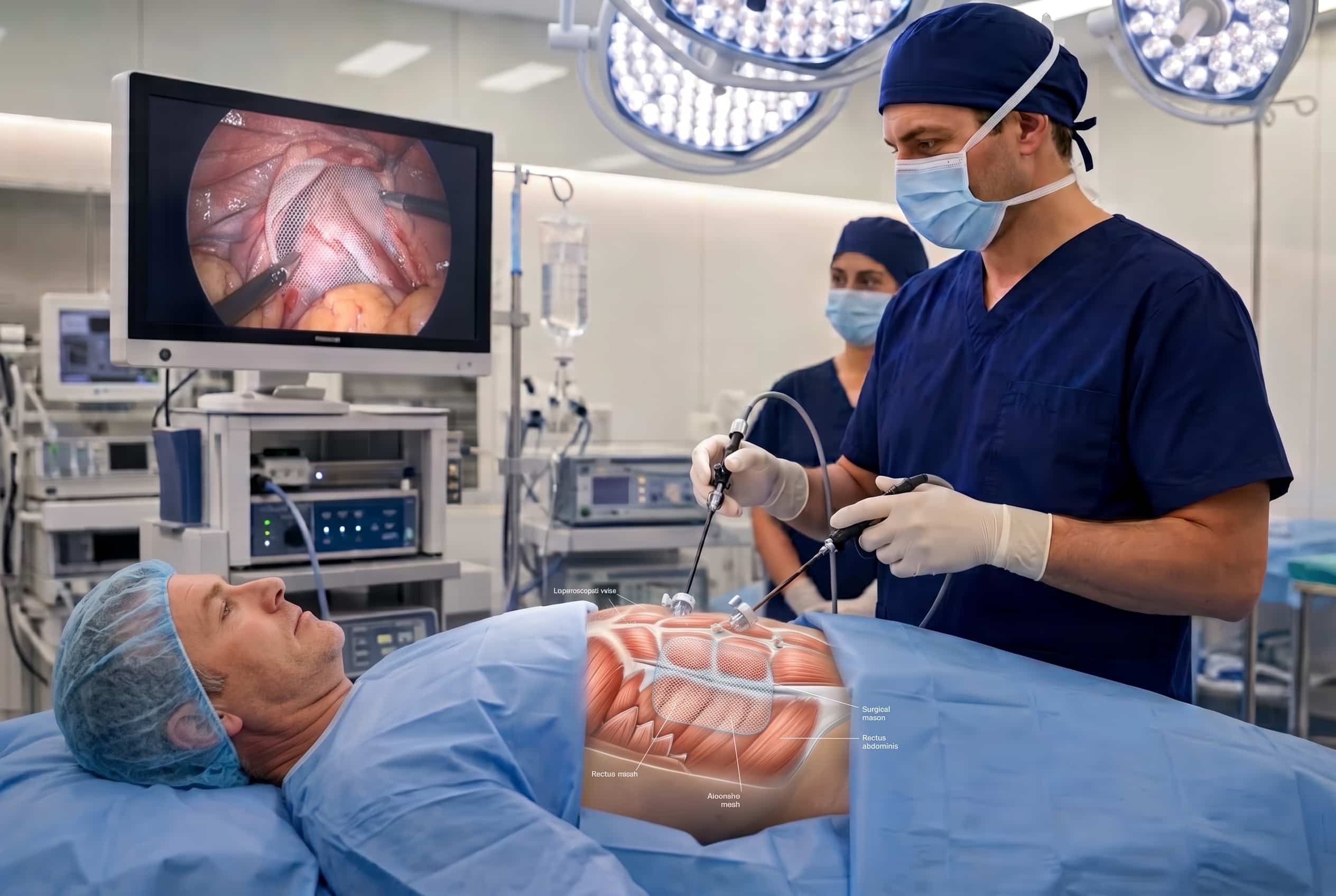
A hernia happens when tissue pushes through a weak spot in the muscles or fascia, the strong layer that helps hold organs in place. Abdominal wall repair returns the bulging tissue to the right place and closes or rebuilds the weak spot. Surgeons often use surgical mesh to add strength and reduce the chance the hernia will come back.
This term is often used when a case needs more planning than a routine repair, such as large ventral hernias, incisional hernias from prior cuts, or recurrent hernias that returned after surgery.

When is abdominal wall repair considered?
Abdominal wall repair may be considered when a hernia is painful, pressing, limiting activity, or getting larger. It is also a primary option for hernias that are recurrences after prior repairs or those located near previous incisions with scar tissue.
Medical factors such as smoking, diabetes, obesity, and nutrition can affect timing. Some patients need risk factor optimization before elective repair to ensure the safest outcome and most durable result.
Surgical approaches
There are three common ways to repair the abdominal wall. The best option depends on your hernia, prior surgery, and overall health.
One incision over the hernia for direct repair and mesh or reconstruction. This is often used for large defects, heavy scar tissue, or prior mesh issues.
Several small incisions using a camera to repair from inside. This approach is typically used for smaller defects and selected ventral hernias.
A minimally invasive approach using robotic instruments controlled by the surgeon. This may help with visualization and suturing in selected cases.
Nullam nec placerat massa. Aenean cursus eros non libero ultricies, sit amet tristique mi viverra. Phasellus pharetra egestas nunc tincidunt pretium. Proin euismod lorem id mi accumsan euismod. Integer non efficitur mauris. Donec efficitur nulla eu dolor tincidunt porta.
Nullam nec placerat massa. Aenean cursus eros non libero ultricies, sit amet tristique mi viverra. Phasellus pharetra egestas nunc tincidunt pretium. Proin euismod lorem id mi accumsan euismod. Integer non efficitur mauris. Donec efficitur nulla eu dolor tincidunt porta.
Preparing for abdominal wall repair
Preparation starts before the day of surgery to make elective surgery safer and more durable through medical review and lifestyle optimization.
Required before surgery
• Review of medical history and current medicines.
• Blood tests and imaging review.
• Instructions about blood thinners and fasting.
• Smoking or nicotine cessation.
• Diabetes control and nutrition planning.
• Weight and activity planning.
• Managing cough, constipation, and other issues that raise abdominal pressure.
Sometimes also ordered
• CT abdomen and pelvis scan to show defect width and contents.
• Collection of prior operative reports and imaging.
When to seek urgent care
Most hernias can wait for a scheduled visit, but seek urgent care if the hernia becomes suddenly severe, very tender, hard, red, or purple.
Likely good candidates
• Patients with painful or activity-limiting hernias.
• Hernias that are getting larger or harder to push back in.
• Recurrence after a prior repair.
• Hernias near previous incisions with scar tissue.
• Large defects where simple closure would pull tissues too tightly.
May need further evaluation
• Patients with unoptimized smoking or nicotine use.
• Uncontrolled diabetes or poor nutrition.
• Significant obesity or recent wounds that increase surgical risk.
Not sure if you qualify?
Dr. Dunn reviews every case personally. Book a consultation and he'll give you an honest answer — even if that answer is "let's get more testing first."
Risks to be aware of
Recovery varies with the repair type and your job. Your personalized plan will cover pain control, activity, and follow-up. Mesh lowers the chance of recurrence but carries specific risks that should be discussed.
Common short-term side effects (expected and temporary)
Expected in recovery
• Pain and discomfort.
• Infection or wound issues.
• Adhesion or obstruction.
• Mesh movement or displacement.
Serious risks (uncommon)
• Trapped bowel or loss of blood flow.
• Severe bloating or inability to pass gas or stool.
• Fever or signs of systemic infection.
What recovery looks like
Follow instructions for pain control, activity, and monitoring for warning signs. Attend all follow-up visits to ensure proper healing.
The procedure includes anesthesia, access via incision or ports, returning tissue, and reconstructing the fascial defect. Some patients go home the same day.
Light walking is encouraged early. Expect discomfort and follow your medicine plan for pain control. Report any sudden severe pain or fever.
Avoid heavy lifting and core strain. Follow-up visits check wounds and manage drains or abdominal binders if they were used.
Activity progression is planned during follow-up visits. Warning signs like redness, pus, or leg swelling should be reported immediately.
Long-term durability depends on anatomy and prior operations. Return to work timelines vary significantly between desk jobs and physical labor.
What to expect long-term
The goal is to provide a repair or reconstruction-level plan that fits your needs based on anatomy, prior operations, and long-term durability. Personalized planning helps match the operation to your health goals.
Questions about abdominal wall repair

Abdominal wall repair is often considered for complex hernias that need more than a simple fix. You might consider this procedure if you have a large ventral hernia, an incisional hernia from a past surgery, or a recurrent hernia that has returned after a previous repair. Your doctor may also suggest it if the hernia causes pain, limits your daily activities, or is getting harder to push back in. A consultation helps determine if surgery is the right path for your specific health needs and goals. Factors like smoking, diabetes, and nutrition can affect the timing of your repair, as optimization, or preparing your body for surgery, is key for a safer outcome.
A CT scan of the abdomen and pelvis is a vital tool for planning complex repairs. This detailed imaging helps your surgeon see the exact size of the weak spot and what is inside the hernia sac, such as bowel or fat. It also shows if there are multiple defects or scar tissue from prior operations. Having this information allows for a more personalized surgical plan, helping the team decide if surgical mesh or advanced techniques like component separation are needed. While the scan provides important details, it does not automatically mean you must have surgery. It is simply a way to ensure the safest approach is chosen for your unique situation.
There are three main ways to perform an abdominal wall repair, and the best choice depends on your specific hernia and health history. Open repair uses one incision over the hernia and is often safest for large defects or heavy scar tissue. Laparoscopic repair involves several small cuts and a camera to fix the area from the inside. Robotic repair is another minimally invasive option that can help with precision in certain cases. Sometimes, advanced techniques like component separation are used to reduce tension on the repair so it can be closed more safely. Your surgeon will discuss which method offers the most durable results for your anatomy and long-term recovery goals.
Recovery after abdominal wall repair is tailored to the type of surgery you had and your daily activity level. You should expect some discomfort, and your care team will provide a personalized plan for pain control and medicines. Early walking is usually encouraged to help your body heal, but you must avoid heavy lifting or core strain for a set time. Some patients may need to use an abdominal binder or have temporary drains to manage fluid while healing. Your follow-up visits are important to check your wounds and plan your return to work. If you notice signs like fever, worsening redness, or sudden severe pain, you should contact your surgical team immediately.

