


Gallbladder Removal
Gallbladder removal, or cholecystectomy, is a common surgery to treat pain and complications caused by gallstones or inflammation.
What is Gallbladder Removal?
Gallbladder removal, medically known as cholecystectomy, is the surgical removal of the small organ located under the liver that stores bile. This procedure is typically performed when the gallbladder causes pain or complications such as gallstones, inflammation, or infection.
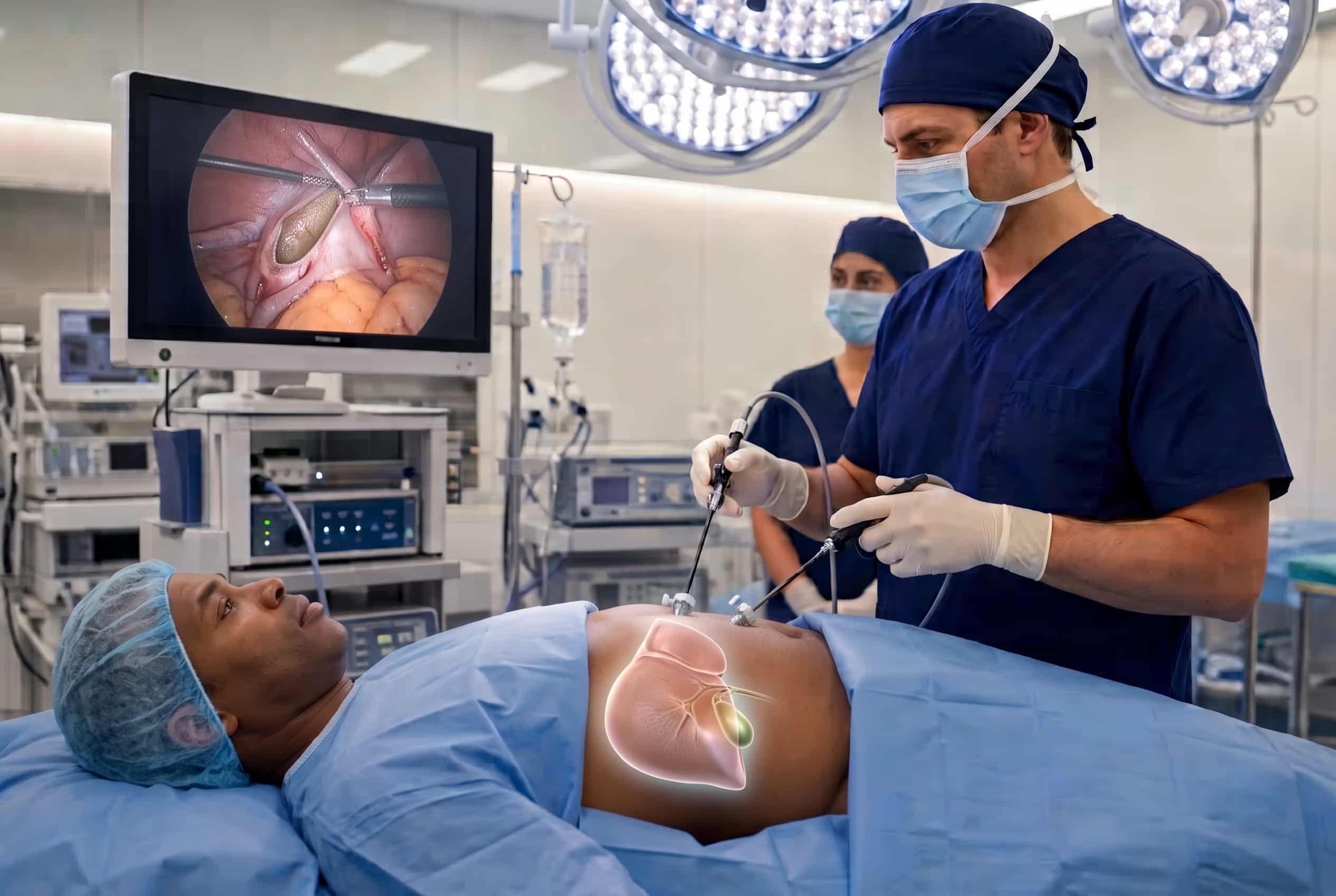
Most gallbladder removals are performed laparoscopically, which involves using small incisions and a camera to guide the surgeon. This approach generally leads to less pain and a faster recovery compared to traditional open surgery.

Why Choose NorCal Integrity Surgery?
Dr. Colin Dunn at NorCal Integrity Surgery provides individualized care for patients throughout Silicon Valley. Each consultation includes a thorough review of your symptoms, imaging, and medical history to determine the safest and most effective surgical plan for your specific needs.
The Surgical Process
Laparoscopic gallbladder removal is a common procedure performed under general anesthesia.
You are placed under general anesthesia to ensure you are asleep and comfortable throughout the procedure.
The surgeon makes several small incisions in the abdomen to insert a camera and specialized surgical tools.
The surgeon identifies and closes the cystic duct and artery before separating the gallbladder from the liver for removal.
Once the gallbladder is removed, the small incisions are closed and you are moved to a recovery area to wake up.
Nullam nec placerat massa. Aenean cursus eros non libero ultricies, sit amet tristique mi viverra. Phasellus pharetra egestas nunc tincidunt pretium. Proin euismod lorem id mi accumsan euismod. Integer non efficitur mauris. Donec efficitur nulla eu dolor tincidunt porta.
Preparing for Surgery
Testing confirms the cause of your symptoms and helps plan the safest surgical approach.
Required before surgery
• Gallbladder ultrasound to check for stones or inflammation.
• Blood tests to check liver function and look for signs of infection.
• Review of medical records, including prior imaging and ER visits.
Sometimes also ordered
• HIDA scan to test how well the gallbladder empties.
• CT scan to look for other causes of abdominal pain or complications.
Is Surgery Right for You?
Surgery is typically recommended when gallbladder issues cause pain or increase the risk of serious complications.
Likely good candidates
• Patients with symptomatic gallstones causing pain or nausea.
• Individuals with acute or chronic inflammation of the gallbladder.
• Patients with gallstone pancreatitis or biliary dyskinesia.
• Those with gallbladder polyps or masses that require removal.
May need further evaluation
• Patients with gallstones that do not cause any symptoms.
• Individuals whose symptoms are determined to be caused by another condition.
• Patients with severe inflammation who may require temporary drainage first.
Not sure if you qualify?
Dr. Dunn reviews every case personally. Book a consultation and he'll give you an honest answer — even if that answer is "let's get more testing first."
Risks to be aware of
Gallbladder removal is a common and generally safe procedure, though all surgery carries some risk. Recovery depends on the surgical approach and your overall health.
Common short-term side effects (expected and temporary)
Expected in recovery
• Incision soreness and abdominal discomfort.
• Shoulder pain caused by gas used during the procedure.
• Short-term digestive changes like bloating or nausea.
Serious risks (uncommon)
• Bleeding or infection during or after surgery.
• Bile leak from the liver or bile ducts.
• Rare injury to the main bile ducts or nearby organs.
• Need to convert from laparoscopic to open surgery for safety.
What recovery looks like
Attend all follow-up visits so your surgeon can monitor your healing and clear you for full activity.
Most laparoscopic cases are same-day procedures. You can go home once your pain and nausea are well-controlled.
Focus on rest and walking to aid recovery. Expect some soreness and follow all discharge instructions for wound care.
Slowly return to light activities. Avoid heavy lifting or strenuous activity until cleared by your surgeon.
Many patients return to their usual daily activities around this time, depending on their individual healing progress.
Long-term recovery is usually complete. Most people live normally without a gallbladder and do not require a special diet.
What to expect long-term
The liver continues to produce bile, which flows directly into the digestive tract. Most people do not need a special long-term diet, though starting with smaller, easy-to-digest meals is recommended during early recovery.
Questions about Gallbladder Removal

You may need to consider gallbladder removal if you have gallstones that cause pain, nausea, or bloating, especially after eating fatty meals. Doctors also recommend this surgery for conditions like an infected gallbladder, ongoing inflammation, or when the gallbladder does not empty correctly. A good candidate is someone whose symptoms and medical tests clearly point to gallbladder issues. If you have stones but no symptoms, surgery might not be necessary. However, delaying surgery after an attack can lead to more serious problems like pancreatitis or bile duct blockages. A consultation helps you understand if surgery is the right choice for your health and symptoms.
Before your procedure, several tests help confirm that your gallbladder is the cause of your symptoms. A gallbladder ultrasound is usually the first step to check for stones, thickened walls, or blocked ducts. You might also have blood tests to check your liver function and look for signs of infection or inflammation in the pancreas. If the ultrasound does not provide a clear answer, a HIDA scan can measure how well your gallbladder empties. In some cases, a CT scan is used to rule out other causes of belly pain. These tests ensure your surgical team has a complete picture of your health before planning the operation.
Most gallbladder surgeries are performed using a laparoscopic approach, which involves smaller incisions and typically leads to a faster recovery. During this procedure, you will be under general anesthesia while the surgeon makes a few tiny openings in your abdomen. A small camera allows the surgeon to see your organs on a screen. They carefully close off the gallbladder's duct and artery before separating the organ from your liver. The gallbladder is then removed through one of the small incisions. If severe inflammation or scar tissue makes the laparoscopic method unsafe, the surgeon may switch to an open procedure using a larger incision to ensure your safety.
Recovery from laparoscopic surgery is often quick, with many patients going home the same day. You can generally return to your normal activities within two weeks, though you should avoid heavy lifting until cleared by your surgeon. It is common to feel some soreness near the incisions or even shoulder pain caused by gas used during the procedure. Walking frequently can help speed up your healing process. While you do not need a special long-term diet, eating smaller and simpler meals at first is often more comfortable. Your liver will still produce bile, which will now flow directly into your digestive system to help you process food.

